Choosing the right membrane is not simply selecting equipment that matches technical specifications; it also directly affects electricity costs, chemical consumption, equipment lifespan, and the stability of the entire production line. Just one mistake in the analysis of feed water or in configuring RO – UF – NF can cause businesses to pay for higher operating costs for many years. Therefore, understanding correctly and selecting the right option from the beginning is the key factor to optimize long-term efficiency.
In water treatment systems, membranes not only determine the quality of the output water but also directly influence operating costs (OPEX) throughout the system’s lifecycle. Many businesses focus on optimizing initial investment costs (CAPEX) while overlooking careful evaluation of feed water characteristics and treatment objectives. As a result, the wrong membrane type or configuration is selected — and operating costs begin to “expand” over time. Below are the most common consequences:
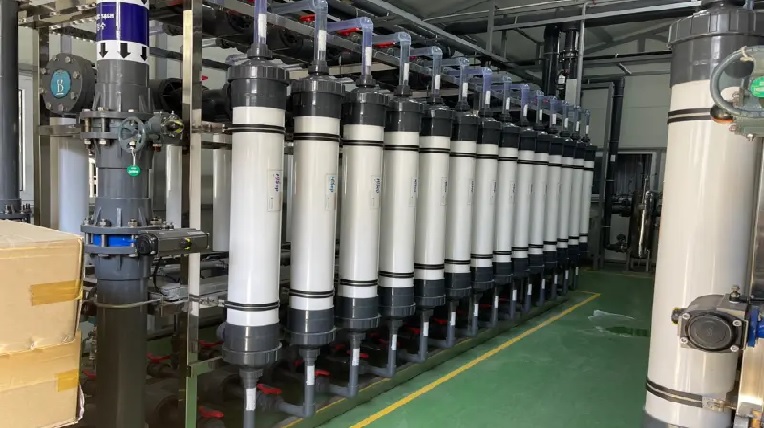
Membranes determine output water quality and directly influence operating costs
The three membrane technologies RO – UF – NF are all based on pressure-driven membrane filtration, but they differ in pore size, separation mechanism, and treatment objectives. Confusion between these three types is a common reason why systems become “over-design” (more than necessary) or “under-design” (insufficient treatment capacity), leading to increased operating costs. Below is the most practical way to distinguish them.
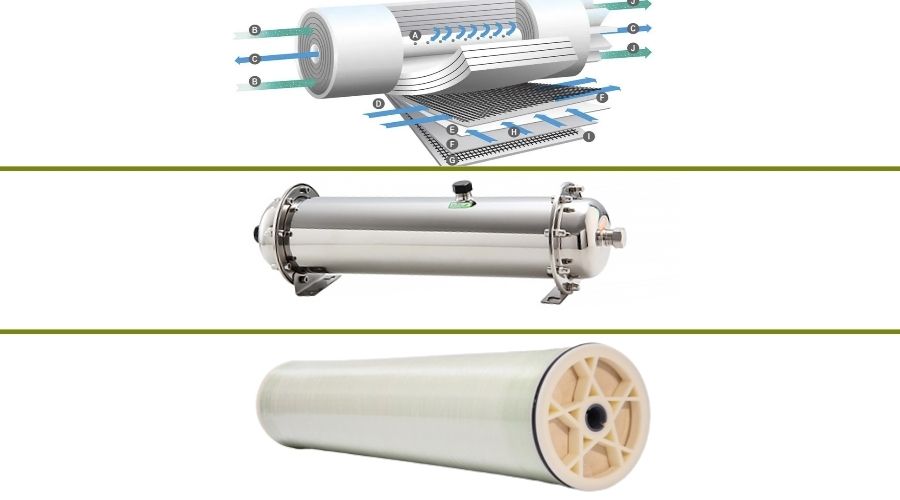
Confusion between these three types is a common cause of “over-design”
RO membranes operate based on the reverse osmosis mechanism and can remove most dissolved salts (TDS), ions, heavy metals, and many extremely small contaminants. The pore size is approximately ~0.0001 micron, allowing almost only water molecules to pass through. Thanks to its very high removal efficiency, RO is commonly used in pure water systems, high-pressure boiler feed water, pharmaceuticals, and electronics manufacturing. However, because high pressure is required to overcome osmotic pressure, RO systems consume significant electricity and require thorough pretreatment to prevent fouling.
UF membranes have a pore size of approximately ~0.01 micron, suitable for removing bacteria, suspended solids, algae, and colloidal particles. UF does not remove dissolved salts, so it does not reduce TDS, but it is very effective in protecting downstream processes, especially RO systems. Therefore, UF is often used as a pretreatment step or in domestic and surface water treatment systems. UF operates at much lower pressure than RO, helping save energy and reduce operating costs.
NF membranes are positioned between RO and UF, with the ability to selectively remove divalent ions such as Ca²⁺, Mg²⁺ (which cause hardness), while also reducing color, organic substances, and part of dissolved salts. Because of these characteristics, NF is often used for water softening, color removal in feed water, or optimizing water quality for the food and beverage industry. Compared with RO, NF requires lower pressure, therefore consumes less electricity while still providing good water quality for many industrial applications.
|
Criteria |
RO | UF | NF |
| Pore size | ~0.0001 µm | ~0.01 µm | ~0.0001 µm |
| Salt removal (TDS) | Very high | No | Partial |
| Bacteria removal | Yes | Yes | Yes |
| Operating pressure | High | Low | Medium |
| Electricity cost |
High |
Low | Medium |
|
Main application |
Pure water | Pretreatment | Softening, color removal |
In practice, most failures and rising operating costs do not come from the technology itself but from incorrect decisions during the design stage. Selecting membranes based on intuition, price, or “habits from previous projects” can cause the system to operate inefficiently for many years. Below are the five most common mistakes companies often make.
The combination of RO – UF – NF is often applied when high water quality is required, feed water is complex, or long-term reuse is the goal. Instead of using a single technology, multi-stage membrane systems help optimize efficiency, protect downstream equipment, and reduce total operating costs.
In large industrial water supply systems and food & beverage factories, the configuration UF → NF/RO helps remove solids, microorganisms, hardness, and dissolved salts step by step. UF acts as pretreatment to protect downstream membranes; NF supports softening and color removal; RO ensures high-quality water for boilers, mixing, or production. This combination stabilizes water quality and extends system lifespan.
In pharmaceutical and hospital sectors, water quality must meet strict standards and remain continuously stable. Multi-stage membrane systems help control microorganisms, endotoxins, and dissolved ions more tightly than single-stage systems. At the same time, staged treatment reduces the load on RO, minimizes fouling, and ensures long-term operational safety.
In wastewater treatment for reuse, feed water often fluctuates greatly and contains organic matter, microorganisms, and dissolved salts. Combining UF to remove solids and microorganisms, followed by NF or RO to remove salts and dissolved substances, helps improve water quality to meet reuse standards for production or cleaning purposes. This is an optimal solution balancing treatment efficiency and operating costs.
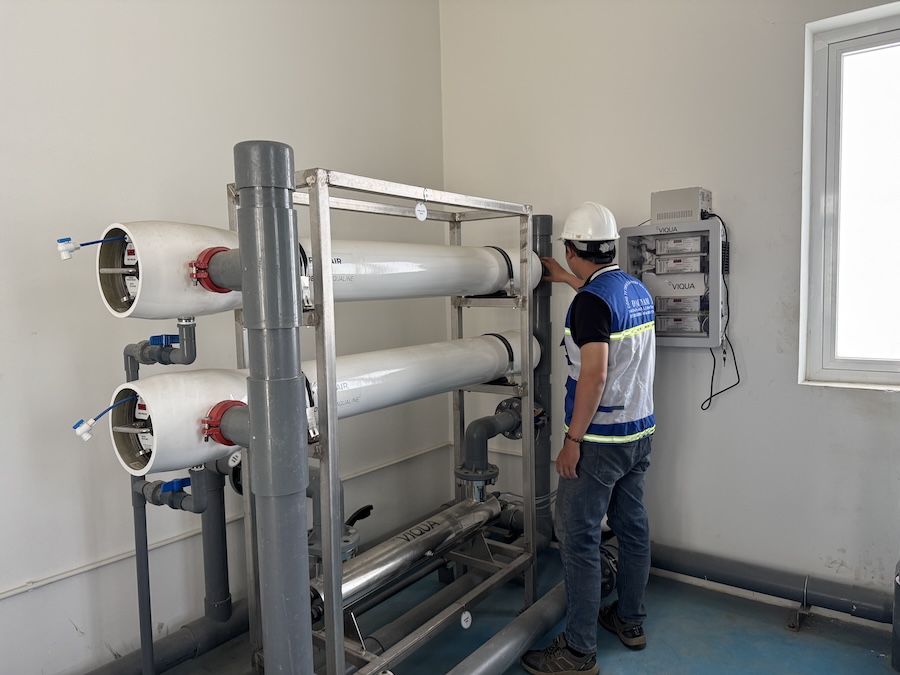
The combination of RO – UF – NF is often applied when high water quality is required
RO, UF, or NF — there is no technology that is “the best”; there is only the technology that is most suitable for specific treatment goals and operating conditions. Proper evaluation of water quality, correct configuration design, and life cycle cost calculation will help systems operate stably, efficiently, and sustainably. Careful investment in the membrane selection stage not only avoids technical risks but also protects operating budgets throughout the project lifecycle.