In biological wastewater treatment systems, oxygen plays a critical role in the growth and activity of microorganisms. To supply oxygen for the treatment process, systems typically utilize air blowers combined with disc diffusers to distribute air into the water in the form of fine bubbles.
Although disc diffusers are relatively simple devices installed at the bottom of treatment tanks, they directly influence oxygen transfer efficiency, pollutant removal performance, nitrogen removal processes, and the overall operating costs of the treatment system.
A disc diffuser is a device used to distribute air from an air blower into water in the form of fine bubbles.
These devices are commonly installed at the bottom of aerobic biological treatment tanks such as Aerotank, AO, AAO, MBBR, SBR, and MBR systems. During operation, air passes through the diffuser and is dispersed into numerous fine bubbles, increasing the oxygen transfer rate into the water. This allows microorganisms to receive sufficient oxygen for growth and for the biodegradation of pollutants in wastewater.
.jpg)
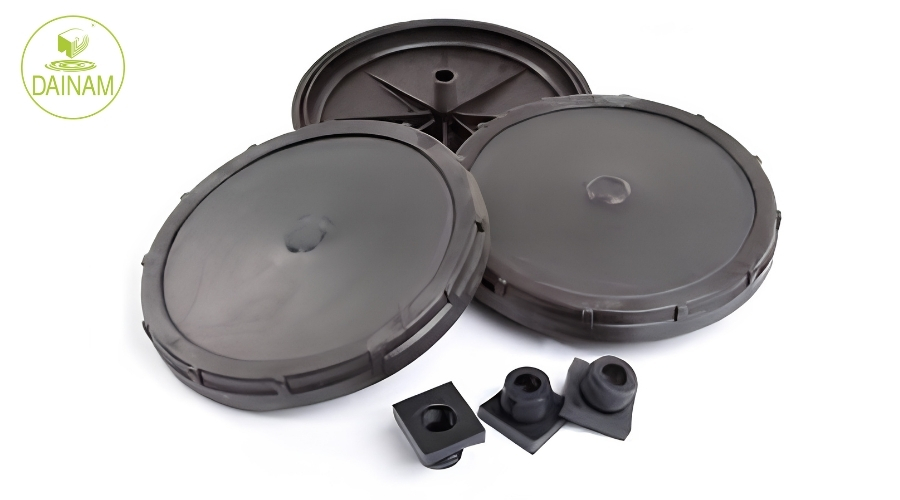
Air diffuser discs in wastewater treatment
Although relatively simple in design, disc diffusers are engineered to ensure stable air distribution over extended periods of operation.
A typical disc diffuser consists of the following main components:
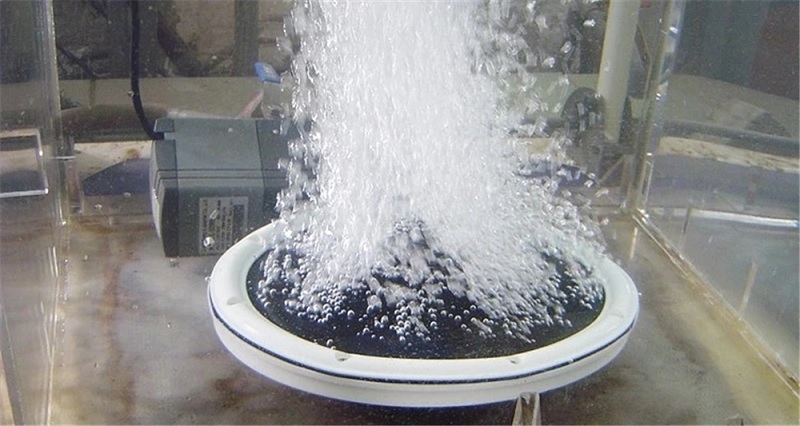
When the air blower operates, compressed air is delivered to the diffusers through the piping network. Under air pressure, the diffuser membrane opens and releases air as thousands of fine bubbles. These bubbles rise from the bottom of the tank to the water surface.
During this process, oxygen from the air gradually dissolves into the water and is utilized by microorganisms to break down pollutants. In addition to oxygen supply, the rising airflow creates circulation within the tank, naturally mixing wastewater and activated sludge.
Common Types of Disc Diffusers
Structure of the air diffuser disc
Aerobic microorganisms require oxygen to degrade organic matter present in wastewater. Without sufficient oxygen, microbial activity decreases, resulting in lower BOD and COD removal efficiency.
Disc diffusers transfer oxygen from the air into the water, providing a stable environment for microbial growth and activity. This is the most important function of the diffuser within a biological wastewater treatment system.
Dissolved Oxygen (DO) is a key parameter that directly affects biological treatment performance.
When DO is maintained within an appropriate range, microorganisms can function efficiently and consistently. Conversely, low DO levels can lead to poor treatment performance, odor generation, and a decline in microbial populations. By continuously distributing air, disc diffusers help maintain the required DO concentration in biological treatment tanks.
In addition to removing organic pollutants, many wastewater treatment systems must also control nitrogen parameters such as Ammonium (NH₄⁺) and Total Nitrogen (TN).
To convert ammonium into nitrate, nitrifying bacteria require a significant amount of oxygen. If the aeration system operates inefficiently, nitrification performance will decline, potentially causing effluent ammonium concentrations to exceed regulatory standards. Therefore, diffuser performance has a direct impact on the nitrogen removal efficiency of the treatment system.
Theoretically, approximately 4.57 mg of oxygen is required to fully oxidize 1 mg of NH₄-N. As a result, when the aeration system cannot meet oxygen demand, ammonium is often the first parameter affected in the treated effluent.
Besides supplying oxygen, the airflow generated by disc diffusers creates circulation within the treatment tank.
This process helps distribute microorganisms evenly throughout the wastewater, increasing contact between biomass and pollutants. It also prevents sludge accumulation at the tank bottom and reduces the formation of dead zones within the system. Consequently, biological treatment efficiency remains uniform throughout the tank volume.
4.5 Contributing to Reduced Operating Costs
In most wastewater treatment systems, air blowers are among the largest consumers of electrical energy.
An efficient diffuser system enhances oxygen transfer efficiency, reducing the amount of air required and optimizing blower performance. Conversely, when diffusers become fouled or deteriorated, oxygen transfer decreases while power consumption increases, resulting in higher operating costs.
Wastewater treatment performance depends not only on the treatment technology but also on maintaining a stable environment for microorganisms.
Disc diffusers provide a continuous oxygen supply, help prevent shock loading conditions, reduce odor generation, and support long-term stable system operation. For this reason, they are considered one of the most critical components in modern biological wastewater treatment facilities.
The role of air diffusers in wastewater treatment
The effectiveness of a disc diffuser depends on several factors, including:
After prolonged operation, diffuser membranes may become fouled with inorganic scale, grease, or biological growth, reducing air distribution performance and oxygen transfer efficiency. Therefore, regular inspection and maintenance are essential to ensure stable system operation.
The lifespan of a disc diffuser depends on membrane material, air quality, wastewater characteristics, and operating conditions.
Under normal operating conditions, EPDM membranes typically last approximately 3–5 years, while PTFE membranes may have a longer service life when properly maintained.
Conclusion
In a biological wastewater treatment system, disc diffusers are far more than simple aeration devices. They play a decisive role in oxygen transfer efficiency, BOD and COD removal, nitrogen treatment performance, and overall energy consumption.
Selecting the appropriate diffuser type and implementing regular maintenance programs can significantly improve treatment efficiency, reduce operating costs, and extend the lifespan of the wastewater treatment facility.