When investing in a wastewater treatment system, many businesses often hesitate between two options: composite wastewater treatment tanks and constructed wastewater treatment systems. One standout solution offers fast construction, space-saving features, and is pre-fabricated as a packaged module; while the other has the advantage of handling large capacities and is easily customized for each project. However, no single solution is suitable for every project. The choice needs to be based on many factors such as treatment capacity, wastewater characteristics, site conditions, construction time, expandability, and investment budget. Understanding the differences between the two options will help businesses make the right decision from the early stages.
Although both function to treat wastewater to meet standards before discharging into the environment, composite wastewater treatment tanks and constructed wastewater treatment systems differ in structure, construction method, and application scope.
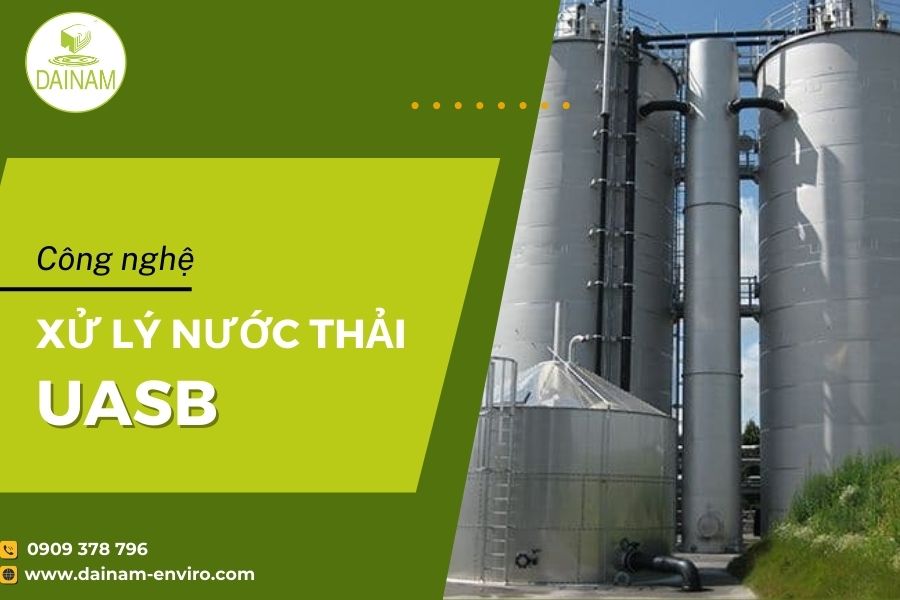
Composite wastewater treatment tanks are packaged wastewater treatment equipment pre-fabricated at the factory using fiberglass-reinforced plastic (FRP). Inside the equipment, all treatment stages such as anaerobic, anoxic, aerobic, settling, and disinfection based on biological technology are fully integrated. For current packaged equipment lines, the standard capacity usually ranges from 2–50 m³/day and can combine multiple modules to meet larger treatment needs.
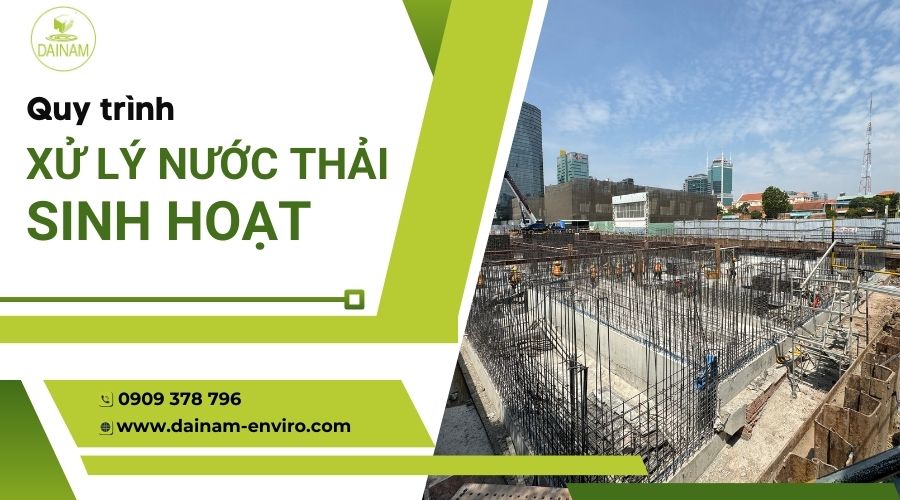
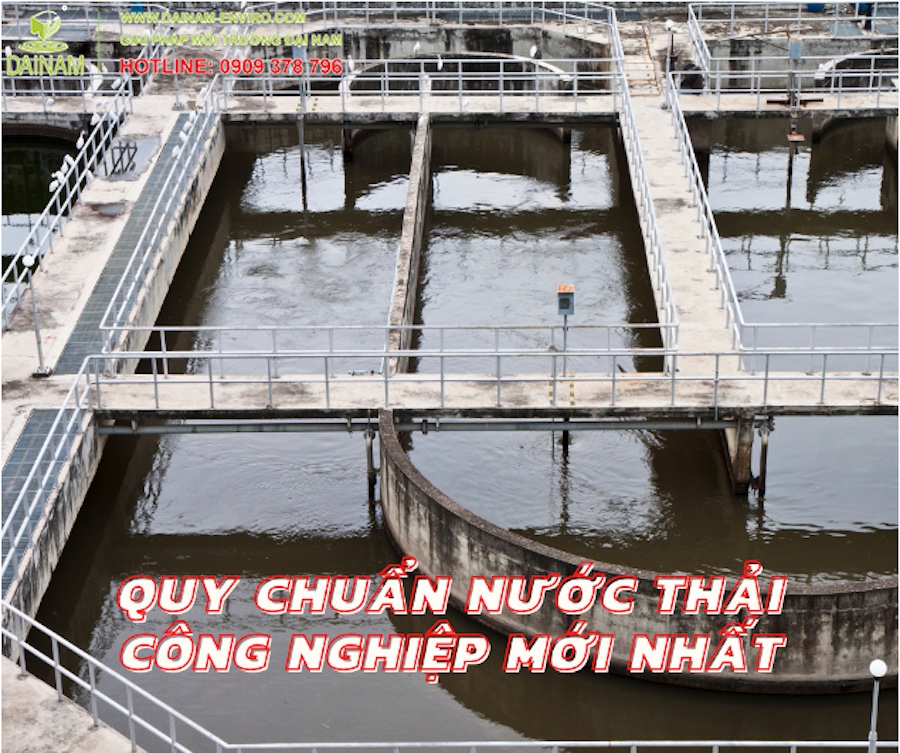
Meanwhile, constructed wastewater treatment systems are built directly on-site using reinforced concrete or steel structures, after which the equipment is installed and each treatment item is completed. This solution is suitable for projects with large capacities, requiring custom designs based on wastewater characteristics, and capable of expansion during use.
To make it easier to visualize, businesses can refer to the comparison table below:
| Criteria | Composite Wastewater Treatment Tank | Constructed Wastewater Treatment System |
| Implementation form | Pre-fabricated at the factory, transported to the site for installation | Built directly at the site |
| Suitable capacity | Usually from 2–50 m³/day for standard packaged equipment, multiple modules can be combined to increase capacity | Usually from 100–200 m³/day upwards, easy to custom design, and can be expanded to thousands of m³/day |
| Construction time | About 1–4 weeks depending on capacity and installation conditions | About 2–6 months depending on scale and construction progress |
| Installation area | Space-saving, suitable for projects with limited space | Requires a larger construction area |
| Expandability | Modules can be added but limited by space and structure | Flexible, easy to increase capacity or add treatment facilities |
| Relocatability | Can be disassembled and moved when needed | Almost fixed after construction |
| Suitable project types | Hotels, resorts, restaurants, schools, clinics, residential areas, small-scale factories... | Factories, industrial parks, hospitals, urban areas, large-scale residential areas... |
It can be seen that the biggest difference between the two solutions lies not in the treatment principle but in the implementation method and application scale. If the composite wastewater treatment tank is suitable for projects requiring fast construction, limited space, and small to medium capacity, the constructed wastewater treatment system will be a more suitable choice for projects with large flow rates, custom design requirements, or future expansion plans.
Each solution is developed to meet different needs regarding capacity, area, and construction conditions. Therefore, instead of evaluating which solution is better, businesses should consider the advantages and limitations of each option to choose the one suitable for the actual project.
Advantages:
Limitations:
.jpg)
Actual Composite Tank completed by Dai Nam
Advantages:
Limitations:
.jpg)
Wastewater treatment system built with reinforced concrete
Another factor that many businesses care about is investment cost. In reality, it cannot be asserted that a composite wastewater treatment tank always has a lower cost than a constructed system or vice versa. For projects with small capacity and fast construction requirements, packaged equipment often helps optimize investment costs and deployment time. Meanwhile, for projects with large capacities or needing future expansion, constructed systems bring better economic efficiency in the long term. Therefore, businesses should evaluate overall capacity, area, construction time, and development plans instead of just comparing initial costs.
Choosing between a composite wastewater treatment tank and a constructed wastewater treatment system does not have a one-size-fits-all answer for every project. Each solution will demonstrate its best efficiency when applied correctly to the scale and usage needs.
The composite wastewater treatment tank will be a suitable choice for projects with small to medium capacities, needing shortened construction time or having limited installation space, such as:
Conversely, constructed wastewater treatment systems are more suitable for projects with large capacities or future expansion requirements, such as:
Besides capacity scale, businesses should also consider other factors such as wastewater characteristics, site conditions, construction schedule, and future development plans. Choosing correctly right from the start not only helps the system operate stably but also limits renovation or upgrade costs later on.
Composite wastewater treatment tanks and constructed wastewater treatment systems both have their own advantages and application scopes. If the project is small-scale, requires fast construction, and has limited installation space, packaged composite wastewater treatment equipment is a solution worth considering. Conversely, for projects with large capacities or requiring future expandability, constructed wastewater treatment systems will bring more advantages in flexibility and long-term investment efficiency.
To choose the appropriate option, businesses should carefully survey the waste source characteristics, treatment capacity, and operational requirements before investing. With experience in designing, constructing, and renovating many wastewater treatment projects, Dai Nam is ready to consult on solutions suitable for each project, helping to optimize treatment efficiency, investment costs, and long-term operational capabilities.