Industrial wastewater treatment is an essential requirement for factories and manufacturing facilities to control pollution and comply with environmental protection regulations. However, wastewater characteristics, pollutant concentrations, and composition vary across industries, making a tailored treatment solution more appropriate than a single standardized process. Understanding wastewater sources, treatment methods, and factors affecting operating performance helps businesses select suitable technologies, optimize investment costs, and maintain consistent effluent quality.
Industrial wastewater is generated by manufacturing, processing, fabrication, and related operations at factories and industrial facilities. Sources may include raw-material washing, equipment cleaning, product rinsing, chemical use, and the operation of auxiliary systems.
Unlike domestic wastewater, industrial wastewater often has a complex composition that varies considerably with raw materials, production technologies, and operating conditions. Even within one factory, wastewater streams may differ substantially, ranging from biodegradable organic wastewater to streams containing metals, oils and grease, or specific chemicals.
Therefore, accurately identifying wastewater sources and pollutant characteristics is an important step before selecting industrial wastewater treatment methods.
Key Characteristics and Parameters of Industrial Wastewater
Common water quality parameters used to assess pollution levels and treatability include:
In addition to pollutant concentrations, pollutant loads should be evaluated using actual wastewater flow rates. This provides a basis for sizing treatment capacity, selecting equipment, and determining the system's loading capacity.
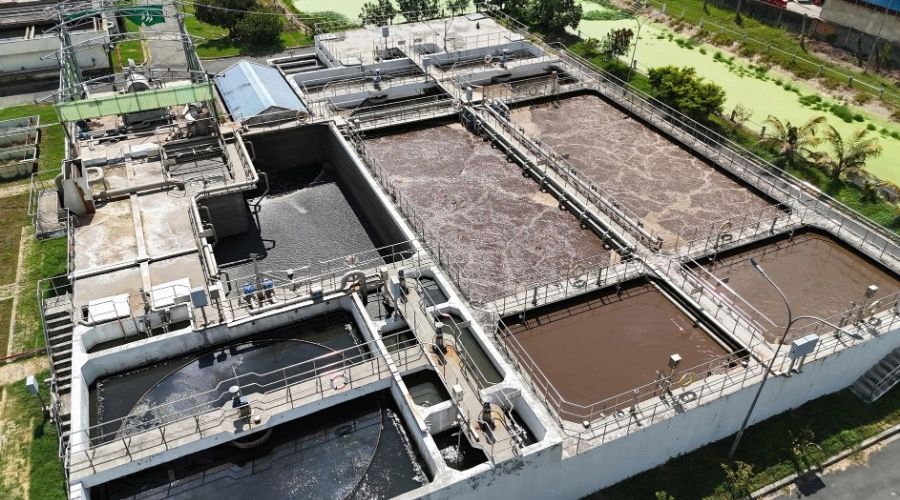
Wastewater treatment system at Hiep Phuoc Industrial Park
Industries use different raw materials, chemicals, and production processes, resulting in different wastewater characteristics. Classification by industry helps identify pollutants of concern and provides direction for selecting appropriate treatment methods.
Industry |
Typical Wastewater Characteristics | Key Parameters to Monitor |
Food and beverage processing |
Organic matter, raw-material residues, oils and grease, and nutrients | COD, BOD₅, TSS, oils and grease, nitrogen, phosphorus |
Seafood processing |
Proteins, organic matter, oils and grease, and solids originating from raw materials | COD, BOD₅, TSS, oils and grease, nitrogen |
Textile dyeing and finishing |
Dyes, surfactants, salts, and finishing chemicals | COD, color, pH, TSS |
Mechanical engineering and metalworking |
Machining oils, metal particles, and cleaning chemicals | Oils and grease, TSS, pH, metals |
Electroplating and surface treatment |
Metal ions, acids, alkalis, and surface-treatment chemicals | pH, metals, cyanide (if present) |
Paper and pulp |
Fibers, organic matter, suspended solids, and color-causing compounds | COD, BOD₅, TSS, color |
Leather tanning |
Organic matter, sulfide, salts, and chromium depending on the processing stage |
COD, BOD₅, TSS, sulfide, chromium |
Electronics and semiconductors |
May contain acids, alkalis, metals, fluoride, and specific chemicals | pH, fluoride, metals, COD |
Rubber processing |
Organic matter, rubber particles, and nitrogen-containing compounds | COD, BOD₅, TSS, nitrogen |
Pharmaceuticals |
Composition varies by product and may include solvents and refractory organic compounds | COD, BOD₅, pH, specific compounds |
These characteristics are indicative only. Actual wastewater composition should be determined through production-process surveys, source identification, and analysis of representative samples.
The Role of Wastewater Stream Segregation and Pretreatment
In many factories, wastewater is collected from multiple production stages. Directly combining all streams in one treatment system without evaluating their properties may compromise treatment performance.
For example, wastewater containing metals or chemicals that inhibit microbial activity can adversely affect biological treatment. Similarly, streams with excessively low or high pH or sharply fluctuating pollutant loads may reduce system stability.
Therefore, segregation and pretreatment at the source should be considered for wastewater streams with distinctive characteristics. This approach controls pollutants early, reduces potential impacts on downstream treatment stages, and supports more reliable operations.
In practice, industrial wastewater treatment systems usually combine several methods to remove or transform different pollutant groups. Depending on wastewater characteristics, mechanical, physical, physicochemical, chemical, and biological processes may be arranged into suitable treatment stages.
Mechanical and physical methods primarily remove debris, solids, and other constituents based on particle size, settling or flotation behavior, or differences in physical properties.
Common units include bar screens, screening devices, sedimentation tanks, and oil separators. These are often used in the initial stages to reduce solids loading and protect equipment in downstream processes.
However, such methods have limitations when treating dissolved pollutants, stable colloidal particles, or emulsified oils. Additional treatment methods are then required.
Physicochemical and chemical methods are widely applied to wastewater containing dispersed solids, oils and grease, metals, and substances that are difficult to remove by conventional mechanical processes.
Coagulation–flocculation
Coagulation destabilizes colloidal particles in wastewater, allowing them to aggregate into larger flocs. The resulting flocs are separated from the water by sedimentation, flotation, or other suitable processes.
This method is often considered for wastewater containing colloidal solids, dispersed particles, certain particulate organic substances, and color-causing compounds that can be removed by coagulation.
Flotation
Flotation uses air bubbles to carry suspended particles and oil droplets to the surface, where they can be separated from the wastewater.
Dissolved air flotation (DAF) is commonly used for streams containing dispersed oils and grease, poorly settling solids, or light particles. Depending on wastewater properties, flotation may be combined with coagulation–flocculation to improve removal efficiency.
Neutralization and chemical precipitation
Neutralization adjusts pH to a range suitable for treatment requirements. Chemical precipitation converts certain dissolved metals into sparingly soluble compounds that can be separated more easily.
Removal efficiency depends on the metal species, pH, wastewater chemistry, and reaction conditions. Wastewater containing complexing agents may require more detailed evaluation of the precipitation process.
Oxidation–reduction
Oxidation–reduction reactions transform certain pollutants into forms with different properties or treatability. Chemical selection and reaction conditions must account for wastewater composition, safety requirements, and the ability to control reaction by-products.
For physicochemical treatment, jar testing or other suitable treatment trials are important for determining chemical dosages, reaction conditions, and pollutant removal performance before full-scale implementation.
Biological treatment relies on microorganisms to transform and remove pollutants that can be treated through biological processes.
It is commonly applied to wastewater containing biodegradable organic matter, such as effluents from food and beverage processing and certain other manufacturing industries.
Depending on operating conditions and treatment objectives, biological processes can be categorized as:
Common technologies include conventional activated sludge, SBR, MBBR, IFAS, and MBR. MBR combines biological treatment with membrane separation to separate biomass from treated water.
Each technology differs in process configuration, biomass concentration, loading capacity, and operating requirements. Selection should therefore be based on wastewater characteristics and treatment objectives rather than technological sophistication alone.
In particular, wastewater containing metals, toxic chemicals, or compounds that inhibit microorganisms requires an assessment of biological treatability and suitable pretreatment before entering the biological system.
For wastewater containing difficult-to-treat constituents or subject to stringent effluent quality requirements, advanced technologies may be added.
Potential solutions include:
These technologies are not mandatory for every industrial wastewater treatment system. Beyond removal performance, businesses should evaluate energy use, chemical and consumable consumption, potential secondary waste streams, and long-term operating costs.
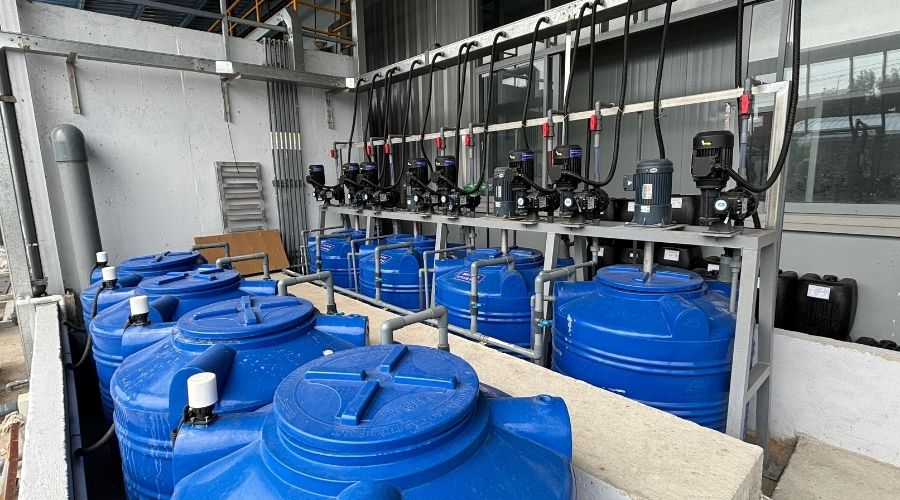
Wastewater treatment system using physicochemical processes
Industrial wastewater treatment processes are designed based on wastewater characteristics, flow rate, pollutant loads, and required effluent quality.
A generalized treatment train may include:
Collection → Pretreatment → Equalization → Physicochemical treatment (if required) → Biological treatment (if suitable) → Sludge separation → Polishing treatment → Discharge
This is an illustrative process flow, not a fixed sequence for every industry. Depending on wastewater characteristics, stages may be added, omitted, or rearranged to achieve the required treatment performance.
Functions of Treatment Stages:
Treatment Stage |
Main Function |
Collection and pretreatment |
Collect wastewater and remove trash, coarse solids, and constituents requiring separation at the source |
Equalization tank |
Reduce fluctuations in flow and pollutant concentrations and stabilize operating conditions |
Physicochemical treatment |
Separate or transform pollutants through coagulation, precipitation, flotation, or chemical reactions |
Biological treatment |
Transform organic matter and remove nutrients when process conditions are suitable |
Sludge separation |
Separate biomass or solids generated during treatment |
Polishing treatment |
Add filtration, disinfection, or advanced processes according to effluent quality requirements |
In addition to the liquid treatment line, the system includes collection and treatment of sludge generated by physicochemical and biological stages. Depending on sludge characteristics, storage tanks, thickening equipment, or dewatering units may be used before transfer and management in accordance with applicable regulations.
Differences in Treatment Processes Across Industries
Although similar unit operations may be used, wastewater treatment processes can differ substantially among industries.
Food-processing wastewater often contains large amounts of biodegradable organic matter, making biological treatment particularly important. Where organic loading is high, a combination of anaerobic and aerobic processes may be considered to improve treatment performance.
For wastewater containing oils and grease, it is necessary to determine whether the oil is free, dispersed, or emulsified before selecting a suitable separation method. In some cases, flotation combined with physicochemical treatment can reduce loading before biological treatment.
Wastewater from electroplating or metal surface treatment, meanwhile, often requires dedicated chemical processes to control metals and specific compounds. Stream segregation, pH adjustment, and metal removal may be critical to overall system performance.
Therefore, an effective treatment process should be developed from site surveys and analysis of actual wastewater, rather than selecting technology based solely on the industry name.
Selecting industrial wastewater treatment technology involves more than choosing tank types or equipment. A suitable solution must meet treatment objectives, construction constraints, operational capabilities, and long-term economic requirements.
Pollutant composition and concentrations are important factors in determining treatment methods. However, assessments must also consider wastewater flow rates to establish actual pollutant loads.
For example, two factories may have the same COD concentration but different flow rates, resulting in different COD loads and therefore different treatment unit sizes, oxygen requirements, and system loading capacities.
The BOD₅/COD ratio can also serve as a preliminary indicator of wastewater biodegradability. However, it does not replace toxicity assessments, evaluation of microbial inhibition, or treatment trials where necessary.
Industrial wastewater flow may vary by production shift, equipment-cleaning activities, or seasonal factors. Large fluctuations in flow rate and pollutant loading can cause hydraulic overloading or shock loading.
Accordingly, system design should consider average and peak flows as well as the timing of wastewater generation. Equalization tanks are commonly used to moderate fluctuations, but their volume and operating strategy must be designed for the actual conditions at each factory.
Required effluent quality is a key factor determining technology selection and the necessary degree of treatment.
For industrial wastewater discharged into receiving waters, QCVN 40:2025/BTNMT is among the important regulatory references to consider, subject to its scope of application and transitional provisions.
Where wastewater is discharged to a centralized collection and treatment system, businesses must check the acceptance criteria and connection requirements established by the infrastructure operator.
Discharge limits must also be determined with reference to the type of wastewater, receiving water body, applicable implementation date, environmental permit, and related regulations. These factors form the basis for establishing design targets and assessing treatment performance.
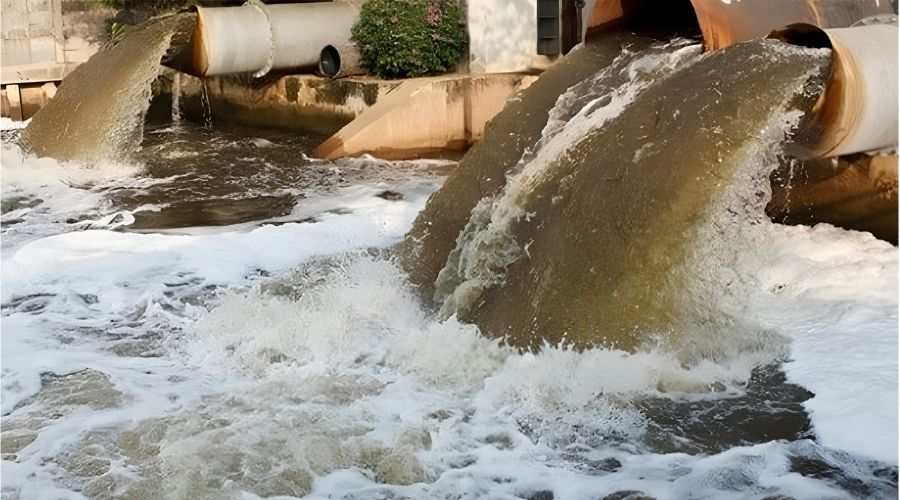
Monitor effluent quality consistently to ensure compliance with applicable standards
Available site area directly affects facility layout, technology selection, and opportunities for future expansion.
For factories with limited space, packaged treatment systems, membrane technologies, or configurations with high biomass concentrations may be considered to optimize the footprint.
However, a smaller footprint does not necessarily translate into better economics. Designs must still provide access for equipment, maintenance, consumable replacement, and sludge management throughout operation.
Industrial wastewater treatment costs include initial capital expenditure and expenses incurred during system operation.
Typical costs include electricity for pumps and blowers, treatment chemicals, operating labor, equipment maintenance, consumable replacement, and sludge collection and disposal.
A system with lower initial investment does not necessarily deliver better long-term economics. Conversely, a more capital-intensive technology should be evaluated based on actual treatment performance and ongoing operating costs.
Technology selection should therefore balance removal efficiency, process stability, ease of operation, and total life-cycle costs.
Industrial wastewater treatment requires comprehensive assessment of wastewater characteristics, pollutant loading, and effluent quality requirements. Depending on the industry, treatment systems may combine mechanical, physicochemical, chemical, biological, and advanced methods to achieve the intended objectives.
An appropriate solution must not only meet effluent quality requirements but also provide stable performance, practical operation, and long-term economic efficiency. Site surveys, wastewater analysis, and data-driven technology selection are therefore important steps before constructing or upgrading a treatment system.
Dai Nam Environmental Solutions Co., Ltd. provides site assessment, consulting, design, construction, and operation services for industrial wastewater treatment systems across multiple manufacturing industries. For each project, Dai Nam evaluates wastewater characteristics, available space, technical requirements, and operating costs to propose an appropriate treatment solution aimed at consistent performance and compliance with current environmental requirements.