Laundry wastewater is generated at industrial laundry facilities, hotel laundry areas, hospitals, factories, and facilities with centralized laundry operations. Besides detergents, the wastewater stream also carries lint/fibers, organic matter, oil and grease, and dirt separated from the laundry. The composition and pollution load vary depending on the emission source; therefore, it is necessary to evaluate the actual wastewater before selecting a treatment technology.
Laundry wastewater is not only generated at workshops specializing in industrial laundry services but also appears as a constituent waste stream in the operations of many production, business, and service facilities.
Some common generation sources include:
The wastewater is primarily formed from the soaking, washing, rinsing, and equipment cleaning stages. Depending on the scale of operation, this water stream can be collected into a separate treatment system or combined with other wastewater sources of the facility.
Particularly for laundry activities within a production line, the wastewater composition can also be affected by preceding stages. Therefore, it is necessary to clearly identify the emission source before evaluating its characteristics and selecting a treatment plan.
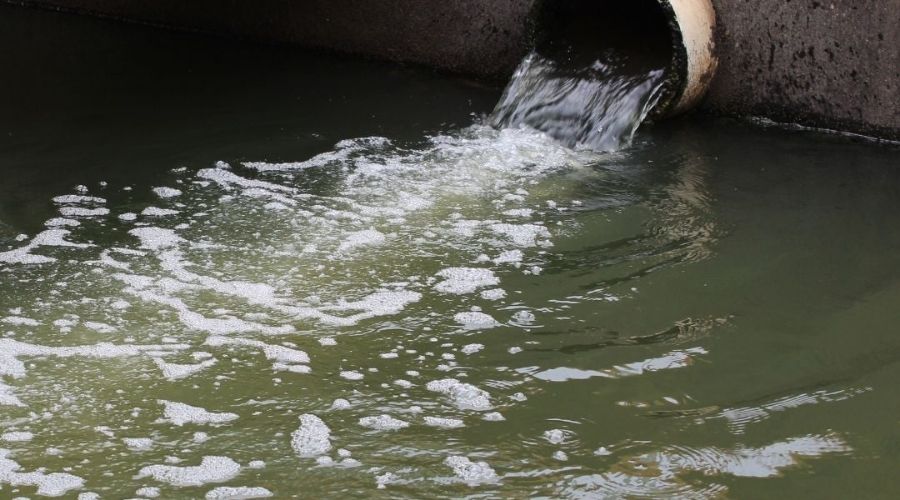
Where does laundry wastewater come from?
The composition of laundry wastewater is primarily formed from two sources: chemicals used during the washing process and dirt separated from the laundry. This is the reason why wastewater at facilities with the same capacity can still differ significantly.
Depending on the process, facilities may use detergents, surfactants, bleaches, softeners, or other specialized chemicals. These components can affect pH, COD, foaming ability, and the efficiency of downstream treatment stages.
Specifically, surfactants can cause the wastewater to foam when mixed or aerated. When present at high concentrations, some detergent chemical components can also affect the activity of microorganisms in biological treatment systems.
To learn more about pollution groups related to detergents, you can refer to the article Detergent Chemical Wastewater Treatment Process. However, the plan applied to laundry wastewater still needs to be evaluated based on the actual composition and load.
Besides the chemicals used, the wastewater also carries dirt accumulated on the fabrics during use, including:
For instance, wastewater from washing hotel towels and bedsheets usually contains organic matter, lint, and detergents. Meanwhile, wastewater from washing machinery wiping rags or protective clothing at some factories may carry additional mineral oils and polluting components characteristic of production activities.
For the washing stage in a textile dyeing line, the wastewater may also contain residual dyes, salts, and dyeing auxiliary chemicals. Therefore, this waste stream needs to be evaluated according to the characteristics of the production activity rather than defaulting to similarities with regular laundry wastewater.
In addition to the pollution composition, a notable characteristic of laundry wastewater is that flow rate and load can change with each washing cycle.
In a single wash batch, the rinse water at different stages may carry varying amounts of dirt and chemicals. The type of chemical, dosage used, temperature, and number of wash-rinse cycles can also alter pH, COD, and surfactant concentrations.
Therefore, parameters such as COD, BOD, TSS, pH, surfactants, and characteristic components need to be considered appropriately for each waste source. The evaluation should not be based solely on the average daily flow rate but must also pay attention to fluctuations according to the operating time.
For hot water washing processes, it is necessary to check the wastewater temperature before introducing it into the biological stage. If bleaches or disinfectants are used, it is necessary to evaluate the residual amount and potential impact on microorganisms, especially when the wastewater is discharged collectively after each wash batch.

Characteristics of laundry wastewater
The treatment plan needs to identify stages suitable for each pollution group while accounting for the batch discharge regime and the receiving capacity of the existing system.
A reference treatment process may include:Collection → Trash & lint separation → Equalization → pH control → Physicochemical (if needed) → Biological treatment → Settling → Finishing treatment
The stages are selected and arranged depending on the actual wastewater characteristics.
Lint, hair, and solids separated from the laundry can accumulate in pipes, pumps, or treatment equipment. Therefore, it is necessary to consider installing suitable bar screens, filter meshes, or lint separation devices right from the initial stage.
For facilities with a large amount of lint/fibers, pre-treatment efficiency directly affects the stable operating capability of downstream stages.
Laundry wastewater is typically generated in batches, causing flow rates and pollution concentrations to fluctuate over time. The equalization tank helps stabilize the water stream before transferring it to the subsequent treatment stages.
The equalization volume must be determined based on the operating regime, number of washing machines, discharge times, and actual flow rate, rather than simply calculating based on the average daily capacity.
Detergents can alter the pH of the wastewater. When the pH falls outside the range suitable for the next treatment stage, adjustment should be considered before introducing the wastewater into the system.
For wastewater containing high TSS, color, oil and grease, or components that need load reduction before biological treatment, the application of physicochemical methods such as coagulation-flocculation, sedimentation, or flotation can be considered.
Coagulation-flocculation can assist in removing solids and a portion of pollutants, but it does not mean it effectively removes all surfactants or dissolved organic matter. The chemical type, dosage, and treatment conditions should be determined through testing on actual samples.
However, physicochemical treatment is not a mandatory stage in every laundry system. The selection should be based on wastewater analysis results and the treatment capacity of downstream stages.
Biological treatment can be applied to reduce the load of biodegradable organic matter in the wastewater. Depending on the input characteristics and treatment requirements, the system can utilize appropriate biological technologies.
For waste streams with high concentrations of surfactants or detergents, the biodegradability and the degree of impact on microorganisms must be evaluated. A biological technology should not be selected based solely on COD or BOD values while ignoring characteristic chemical components.
Following the primary treatment stages, the wastewater may need further treatment to control remaining parameters according to output requirements.
The addition of filtration, disinfection, or other finishing treatment methods must be based on the post-treatment water quality and the system's objectives, avoiding the installation of truly unnecessary stages.
To guide technology selection, refer to the following table:
|
Wastewater Characteristics |
Treatment Direction to Consider |
|
High lint, fibers, solids |
Trash separation, lint separation, and pre-treatment |
| Fluctuating flow rate, load | Equalization |
| Fluctuating pH | pH control and adjustment |
| High TSS, color | Consider physicochemical treatment |
| Contains oil and grease from laundry | Appropriate pre-treatment or oil separation |
| Contains easily biodegradable organic matter, low level of microbial inhibition | Consider biological treatment |
| High output quality requirements | Add suitable finishing treatment |
The table above is for orientation purposes only. When designing, it is necessary to determine the role of each stage and evaluate the entire system's ability to meet output requirements.
For specialized laundry facilities, laundry wastewater is usually the main waste stream, so the system can be designed directly according to the characteristics of this water stream.
However, at hotels, factories, or facilities with multiple emission sources, laundry wastewater might only account for a portion of the total wastewater volume. In such cases, compatibility must be evaluated before deciding whether to use combined collection or separate treatment.
If the laundry wastewater stream has suitable characteristics and falls within the receiving capacity of the common system, the combined collection approach can be considered. Conversely, for wastewater containing high levels of oil and grease, characteristic chemicals, or highly fluctuating pH, separate pre-treatment might be needed before introducing it into the system.
Selecting the appropriate plan right from the design phase helps minimize impacts on common treatment stages, while also avoiding the investment in an additional separate system when it is not truly necessary.
Laundry wastewater has a pollution composition and load that depends on the type of laundry, chemicals used, and operational regime. Besides detergents, the wastewater stream may also contain lint/fibers, organic matter, oil and grease, dyes, and other characteristic components depending on the emission source.
Therefore, technology selection must be based on survey results, actual wastewater characteristics, and the ability to integrate with existing treatment systems, rather than applying a fixed flowsheet for every facility.
Dai Nam provides solutions for surveying, designing, constructing, and operating wastewater treatment systems tailored to the emission source characteristics of each project. Correctly determining the collection plan and treatment technology right from the start helps the system operate stably, effectively control polluting components, and meet output wastewater quality requirements.