In a wastewater treatment system, anaerobic, anoxic, and aerobic tanks create different biological environments to perform their corresponding treatment processes. The difference lies not only in the presence or absence of oxygen but also relates to biological conditions, pollutant conversion mechanisms, treatment goals, and the operational method of each stage.
Therefore, not every system needs to incorporate all three types of tanks. The selection and combination of biological environments must be based on the characteristics of the waste source, pollution load, and post-treatment water quality requirements.
The fundamental difference between the three environments lies in the oxygen conditions and the biological processes occurring inside. This is also the factor that determines the function of each tank in the wastewater treatment train.
| Criteria | Anaerobic Tank | Anoxic Tank | Aerobic Tank |
| Environmental conditions | No significant dissolved oxygen | Very low dissolved oxygen, with Nitrate/Nitrite participating in the biological process | Has dissolved oxygen |
|
Characteristic process |
Anaerobic digestion |
Denitrification | Organic oxidation, Nitrification |
| Typical role | Organic matter treatment for suitable waste sources | Nitrogen removal | Organic matter and Ammonia treatment |
| Aeration | None | Has aeration system | Has aeration system |
| Characteristic products | CH₄, CO₂, and conversion products under suitable conditions | N₂ | CO₂, biomass, NO₃⁻ during Nitrification |
| Common technologies | UASB, anaerobic filter... | A/O, A²/O... | Activated sludge, MBBR, IFAS... |
A point that can easily cause confusion is that both anaerobic and anoxic tanks are not aerated like the aerobic tank. However, the biological conditions of these two environments are not the same.
In the anoxic environment, dissolved oxygen is maintained at a very low level, and microorganisms can use Nitrate/Nitrite as an electron acceptor in the denitrification process. In the anaerobic environment, there is no dissolved oxygen, and Nitrate/Nitrite is not used according to this mechanism. It is this difference in biological conditions that creates the distinct treatment functions of each tank.
Each biological environment is suited to specific conversion processes. Understanding the role of each tank makes it easier to visualize why a system might need to combine multiple different biological stages.
The anaerobic tank creates an environment for groups of microorganisms to decompose organic matter under conditions without dissolved oxygen. During anaerobic digestion, organic matter is converted through multiple stages by different groups of microorganisms. When conditions are appropriate and the process is complete, a portion of the organic matter can be converted into Methane gas (CH₄), CO₂, and other conversion products.
The main roles of the anaerobic tank include:
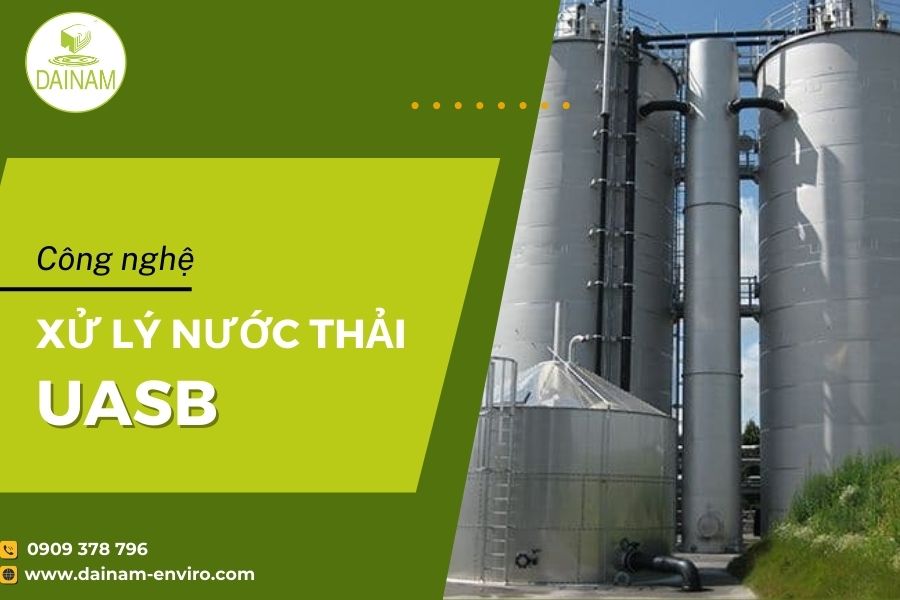
In practice, anaerobic treatment is often considered for wastewater sources with high organic content. Some common technologies include UASB, anaerobic filters, and types of anaerobic tanks utilizing suspended or attached biomass.
However, efficiency and applicability also depend on waste source characteristics, organic load, temperature, retention time, and output water quality requirements. Therefore, the anaerobic tank is not a mandatory stage in every wastewater treatment system.
The anoxic tank is commonly used in systems requiring Nitrogen treatment. The characteristic process is denitrification, in which Nitrate/Nitrite is converted through intermediate steps and ultimately into Nitrogen gas that escapes from the water.
The main roles of the anoxic tank include:
The anoxic tank is usually mixed to maintain contact between the wastewater and biomass but is not aerated like the aerobic tank. In many technological flowsheets, water containing Nitrate from the aerobic zone is recirculated back to the anoxic zone to continue the Nitrogen treatment process.
The denitrification process also requires a suitable carbon source for the microorganisms to operate. The carbon source can be naturally present in the wastewater or supplemented depending on the waste source characteristics and the system's operational plan.
For more details on the principles, structure, and operating conditions of this stage, refer to the article Anoxic Tanks and Applications in Wastewater Treatment.
The aerobic tank utilizes oxygen to maintain the activity of the microbial system and carry out biological oxidation processes. This is a common stage in many domestic and industrial wastewater treatment systems.
Two critical roles of the aerobic tank include:
The nitrification process can be visualized in the sequence:
NH₄⁺ → NO₂⁻ → NO₃⁻
Depending on the technology, the biomass in the aerobic tank can exist in a suspended form like activated sludge technology, as a biofilm attached to media like MBBR, or a combination of both forms like IFAS.
When the system needs to treat Nitrogen, the Nitrate formed in the aerobic zone can be recirculated to the anoxic zone to carry out the denitrification process. The entire process can be visualized in the sequence:
NH₄⁺ → NO₂⁻ → NO₃⁻ → N₂↑
In this sequence, the process from Ammonia to Nitrate mainly occurs in the aerobic environment, while the process of converting Nitrate into Nitrogen gas takes place in the anoxic environment. The two stages perform different tasks but are directly linked in the Nitrogen treatment process.
.jpg)
Large-capacity wastewater treatment system
There is no fixed formula stating that every wastewater treatment system must be arranged in an anaerobic – anoxic – aerobic sequence. The selection must start from the pollution composition and the treatment goals of each waste source.
| Goal, Wastewater Characteristics | Stage Usually Considered |
| High organic load | Anaerobic combined with downstream stages when appropriate |
| Treatment of biodegradable BOD, COD | Aerobic |
| Ammonia treatment | Aerobic to facilitate nitrification |
| Total Nitrogen treatment | Combination of aerobic and anoxic |
| Simultaneous treatment of organic, Nitrogen, and Phosphorus | Consider a suitable combination flowsheet like A²/O |
For wastewater with a high organic load, the anaerobic stage can be considered to partially reduce the load before the wastewater enters downstream stages. However, biodegradability and waste source characteristics must be evaluated prior to selection.
If the primary goal is treating biodegradable BOD, COD, and Ammonia, the aerobic environment usually plays a vital role. When output requirements include Total Nitrogen, the system must consider both the nitrification and denitrification processes, making coordination between the aerobic and anoxic environments necessary.
Not every system needs to incorporate all three environments. Adding a stage only makes sense when that stage serves a specific treatment goal and is suitable for the waste source characteristics.
When selecting biological stages, the following should be considered:
Therefore, the critical question is not how many types of tanks the system needs, but rather what components the wastewater contains that need treating and what biological processes must be created to achieve the output requirements.
Depending on the waste source characteristics and treatment goals, biological environments can be combined in various ways. The tank arrangement sequence and recirculation streams also directly affect the actual function of each stage.
Anoxic → Aerobic
This arrangement is often considered in systems that need to treat organic matter, Ammonia, and Nitrogen. In the aerobic zone, Ammonia is nitrified into Nitrate. The internal recirculation stream then brings a portion of the Nitrate-containing water from the aerobic zone back to the anoxic zone to perform the denitrification process.
Thanks to the coordination between the two environments, Nitrogen can be converted from Ammonia into Nitrate, and further into Nitrogen gas to be eliminated from the wastewater.
Anaerobic → Aerobic
For some wastewater sources with high organic loads, the anaerobic stage can be arranged first to reduce the organic load. The wastewater then continues to be treated in the aerobic environment to handle the remaining organic matter and other polluting components according to the output goals.
Applying this flowsheet depends on the waste source characteristics and should not be considered a fixed configuration for every system.
Anaerobic → Anoxic → Aerobic
Combining all three environments allows multiple different biological processes to be carried out within the same train. However, the function of each zone still depends on the technology, wastewater characteristics, and how the recirculation streams are organized.
A common example is A²/O technology with three zones: Anaerobic – Anoxic – Oxic. In this flowsheet, the anaerobic zone creates conditions for processes related to biological Phosphorus removal; the anoxic zone performs denitrification; while the aerobic (oxic) zone performs organic matter oxidation, nitrification, and related Phosphorus uptake processes. The internal recirculation stream brings nitrified water from the aerobic zone back to the anoxic zone, helping to maintain the Nitrogen removal process.
It is important to note that the anaerobic zone in A²/O technology should not simply be understood as an anaerobic tank used to decompose high organic loads like a UASB. In the A²/O system, anaerobic conditions are also created to support the biological Phosphorus removal process. The EPA also describes A²/O as a configuration designed for the simultaneous removal of CBOD, Nitrogen, and Phosphorus.
Therefore, having a system with three consecutive tanks—anaerobic, anoxic, and aerobic—is not enough to conclude that it is an A²/O technology. It is necessary to examine the actual function of each zone, the sludge recirculation stream, the internal recirculation stream, and how the biological processes are organized throughout the entire system.
.jpg)
It is necessary to select technology and suitable tank types based on the source and treatment goals
Whether using an anaerobic, anoxic, or aerobic tank, treatment efficiency relies on maintaining the appropriate conditions for the microbial system and the biological processes that need to occur.
Some factors that need to be monitored include:
For systems combining multiple tanks, a change in one stage can affect the subsequent stage. For instance, an unstable nitrification process in the aerobic tank will reduce the amount of Nitrate returned to the anoxic tank, thereby affecting the denitrification capability.
Therefore, treatment efficiency needs to be evaluated across the entire train rather than relying solely on the status of a single, isolated tank.
Anaerobic, anoxic, and aerobic tanks create different biological environments and handle different treatment processes. Anaerobic tanks can be applied to decompose organic matter for suitable wastewater sources; anoxic tanks play a vital role in the denitrification process; while aerobic tanks handle organic matter treatment and create conditions for the Ammonia nitrification process.
Not every wastewater treatment system needs to be equipped with all three types of tanks. The selection must be based on the characteristics of the waste source, pollution load, treatment goals, and actual operating conditions. When the environments are combined, the function of each tank and the recirculation streams must also be appropriately designed so that the biological processes support one another.
Dai Nam provides comprehensive solutions from surveying, technological consulting, and design to the construction and operation of wastewater treatment systems. Each plan is tailored based on the waste source characteristics, capacity, and output requirements of every project, aiming for stable treatment efficiency and convenience during long-term operation.