The Anoxic tank is an important structure in many current biological wastewater treatment systems. The tank operates under conditions lacking dissolved oxygen, creating a suitable environment for denitrifying bacteria to develop and convert nitrogen in the wastewater into nitrogen gas (N₂) that escapes to the outside. Consequently, the Anoxic tank contributes to reducing Total Nitrogen (TN), supporting biological phosphorus removal, and enhancing wastewater treatment efficiency. So, what is an Anoxic tank, and what are its structure and operating principles? Let's find out with Dai Nam right below.
1. What is an Anoxic tank?
The Anoxic tank is an important component in a wastewater treatment system, often applied in AAO (Anaerobic – Anoxic – Oxic) or A2O technologies to remove nitrogen before discharging it into the environment.
In the Anoxic tank, dissolved oxygen is maintained at a very low level, but nitrate (NO₃⁻) is still present. At this time, denitrifying microorganisms will use nitrate instead of oxygen to decompose organic matter, simultaneously converting nitrate into nitrogen gas(N₂) that escapes from the water.
Advantages of the Anoxic tank:
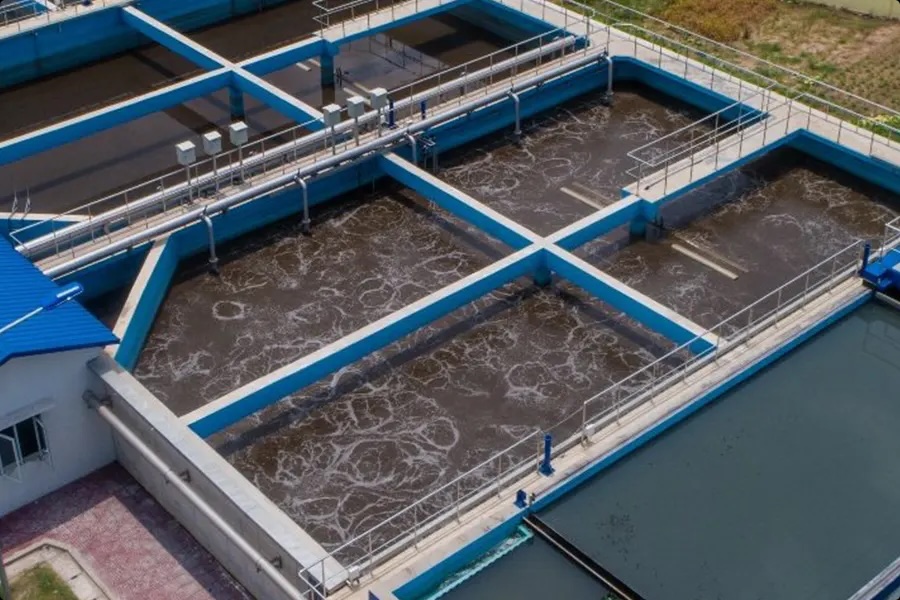
Optimizing the removal of organic matter and nutrients with low operating costs
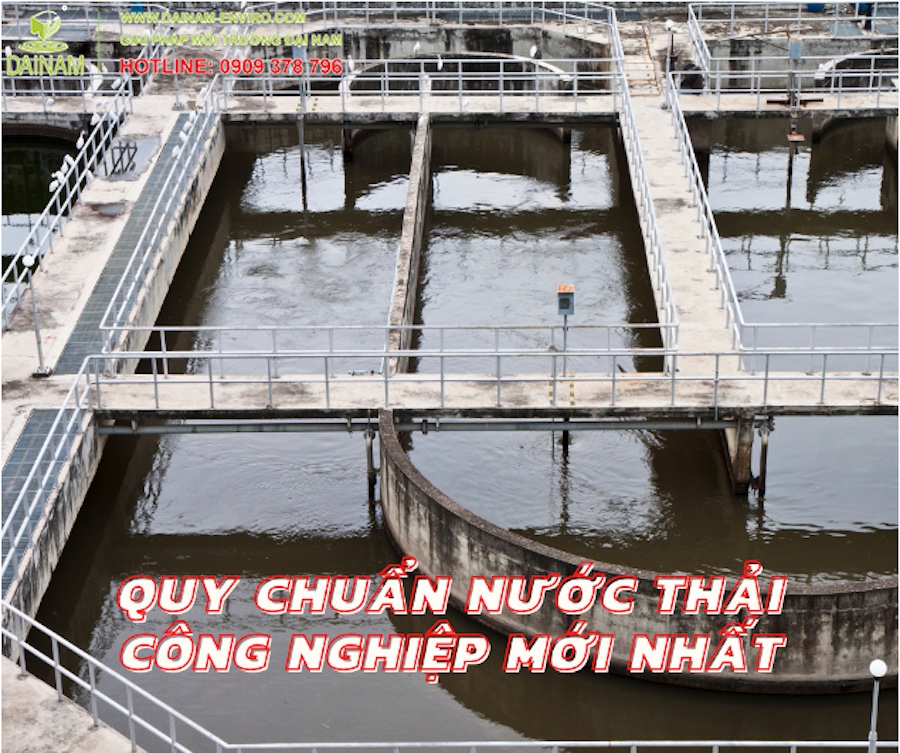
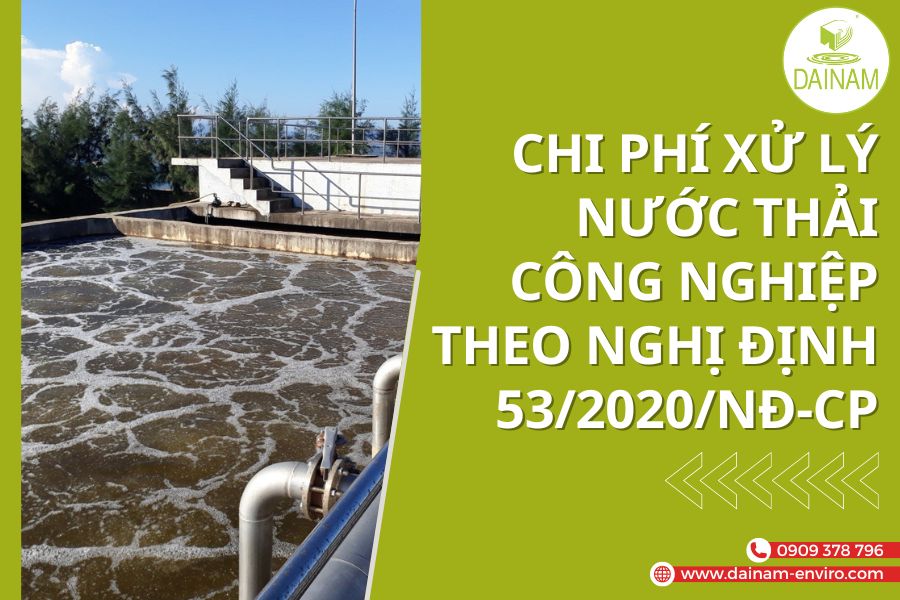
Anoxic tanks are usually constructed of reinforced concrete or steel, with rectangular or circular shapes depending on the project's scale. To ensure the denitrification process occurs effectively, the tank is typically equipped with the following items:
Mixing system: Uses submersible mixers to create a circulating flow, helping the activated sludge and wastewater mix evenly without increasing the dissolved oxygen level in the tank.
Nitrate recirculation system: Recirculates a portion of the nitrate-rich water from the aerobic tank back to the Anoxic tank to provide a nitrate source for the denitrification process.
Sludge recirculation system: Recirculates a portion of the activated sludge from the settling tank back to the beginning of the system to maintain a stable microbial density and improve treatment efficiency.
In most wastewater treatment systems applying AAO technology, the Anoxic tank is positioned between the Anaerobic tank and the Aerobic tank (Aerotank).
This is a common position because the Anoxic tank can utilize the remaining organic carbon source in the wastewater while receiving the nitrate-rich recirculation stream from the aerobic tank to perform the denitrification process.
The choice of the Anoxic tank's position also depends on the treatment technology, wastewater characteristics, and effluent quality requirements. However, for the tank to operate efficiently, it is necessary to ensure the presence of a carbon source, a nitrate source, and an environment lacking dissolved oxygen.
The main task of the Anoxic tank is to remove nitrogen through the denitrification process. Under anoxic conditions, denitrifying microorganisms will use nitrate instead of oxygen to decompose organic matter and generate energy.
In the Anoxic tank, nitrate (NO₃⁻) is converted through intermediate forms and finally into nitrogen gas (N₂) that escapes from the water according to the reaction:
This process significantly reduces the Total Nitrogen content in the wastewater, limits the risk of eutrophication in receiving waters, and meets the requirements of discharge standards.
Besides the denitrification function, in some technologies like AAO or A2O, the Anoxic tank also supports the biological phosphorus removal process through the activity of phosphorus-accumulating microorganisms. However, the primary role of the Anoxic tank remains nitrogen removal, while the phosphorus absorption process mainly takes place in the aerobic tank.
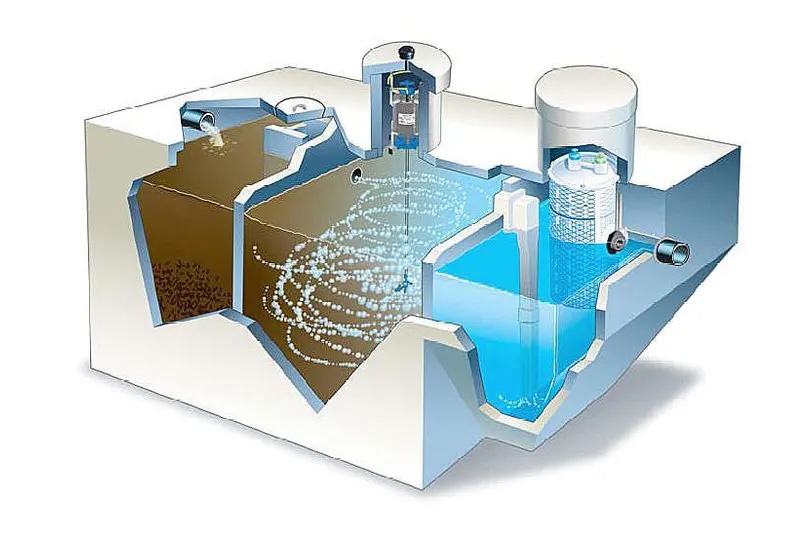
The position of the Anoxic tank in the wastewater treatment system can be adjusted flexibly
Anoxic tanks are widely applied in many wastewater treatment systems to enhance nitrogen removal efficiency and meet the requirements of discharge standards.
The Anoxic tank is often combined with the anaerobic tank and aerobic tank to create a complete biological treatment process, helping the system operate stably and achieve high treatment efficiency.
The Anoxic tank is an important structure in modern wastewater treatment systems, tasked with removing nitrogen through the denitrification process and supporting the biological phosphorus removal process. When designed and operated correctly, the Anoxic tank helps improve treatment efficiency, reduce operating costs, and meet the requirements of discharge standards.
Currently, Dai Nam Environmental Solutions Company provides consulting, designing, constructing, and operating solutions for wastewater treatment systems in many fields such as industrial, domestic, medical, and livestock. Contact 0909 378 796 for the Dai Nam engineering team to advise on the most suitable and optimal solution for your project.