Livestock wastewater generated from farm cleaning, feces, urine, leftover feed, and equipment washing usually contains very high levels of organic matter, Nitrogen, Phosphorus, and microorganisms. If not properly treated, this type of wastewater can cause water pollution, generate odors, and severely affect the surrounding environment. To enhance environmental management in the livestock sector, the Ministry of Natural Resources and Environment (MONRE) has issued QCVN 62:2025/BTNMT, replacing QCVN 62-MT:2016/BTNMT, introducing many notable changes regarding discharge limits and livestock wastewater management requirements.
QCVN 62:2025 is the National Technical Regulation on Livestock Wastewater, issued alongside Circular 04/2025/TT-BTNMT by the Ministry of Natural Resources and Environment. This regulation specifies the maximum allowable limit values for pollution parameters in livestock wastewater before it is discharged into receiving water sources.
QCVN 62:2025/BTNMT officially takes effect on September 1, 2025, and completely replaces the previous QCVN 62-MT:2016/BTNMT. The issuance of this new regulation aims to synchronize the current environmental regulatory system while improving management efficiency for the rapidly developing livestock industry in Vietnam.
This regulation applies to organizations and individuals involved in livestock activities that generate wastewater discharged into the environment, including:
Thus, not only large-scale farms but also household livestock operations generating wastewater must pay attention to the requirements of QCVN 62:2025/BTNMT to ensure compliance with environmental protection regulations.
Besides stipulating discharge limits, the regulation also serves as a legal basis for environmental management agencies to conduct inspections, audits, and evaluate the compliance levels of enterprises during their operations.
.jpg)
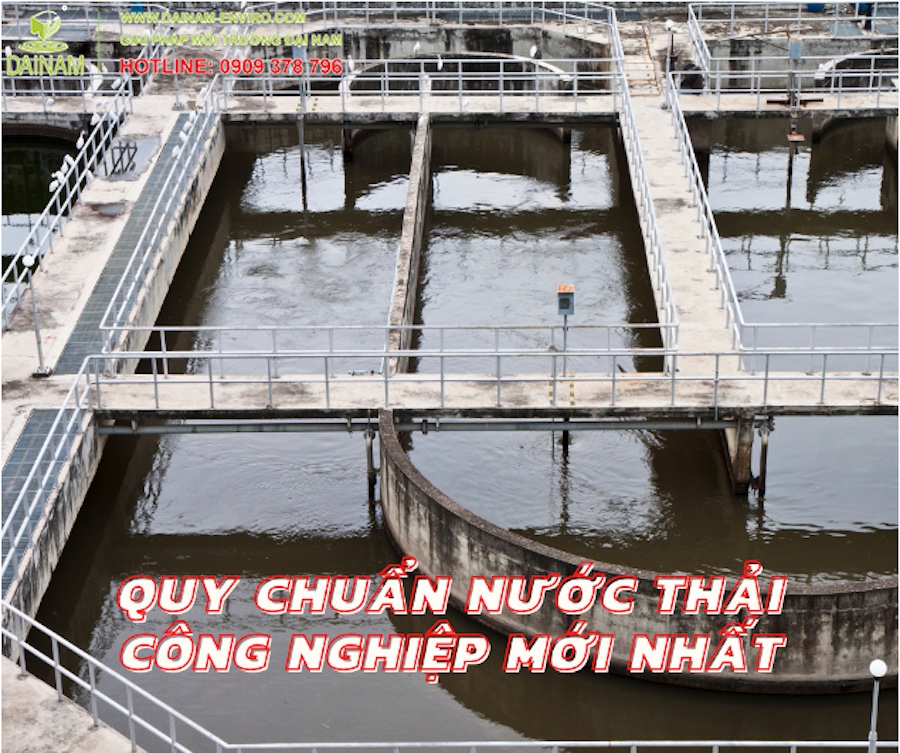
QCVN 62:2025/BTNMT acts as the primary guideline for livestock wastewater treatment.
To control the pollution level of livestock wastewater before it is discharged into the environment, QCVN 62:2025/BTNMT stipulates several important parameters related to organic, nutrient, and microbiological pollution. These indicators frequently appear at high concentrations in livestock wastewater and can significantly impact water quality if not appropriately treated.
Key indicators controlled under this regulation include:
Among these, BOD5 and COD reflect the level of organic pollution in the wastewater; Total Nitrogen and Total Phosphorus are directly related to the risk of water eutrophication; while Coliform reflects the level of microbiological pollution and potential risks to public health.
A notable new feature of QCVN 62:2025/BTNMT is that it allows the application of either COD or TOC during wastewater quality assessment, rather than relying solely on COD as before. This gives enterprises more flexibility in monitoring and evaluating their wastewater treatment efficiency.
The specific limits for each parameter are detailed in the table below:
| No. | Parameter | Unit | A | B | C |
| 1 | pH | - | 6 - 9 | 6 - 9 | 6 - 9 |
| 2 | Biochemical Oxygen Demand (BOD5 at 20°C) | mg/L | ≤ 40 | ≤ 60 | ≤ 100 |
|
3 |
Chemical Oxygen Demand (COD) |
mg/L |
≤ 65 | ≤ 150 | ≤ 250 |
| or Total Organic Carbon (TOC) |
mg/L |
≤ 35 |
≤ 70 | ≤ 130 | |
| 4 | Total Suspended Solids (TSS) | mg/L | ≤ 40 | ≤ 100 | ≤ 120 |
| 5 | Total Nitrogen (T-N) | mg/L | ≤ 20 | ≤ 60 | ≤ 120 |
|
6 |
Total Phosphorus (T-P) | mg/L | |||
| - Receiving source: lakes, ponds, swamps | ≤ 2.0 | ≤ 3.0 | ≤ 4.0 | ||
| - Receiving source: rivers, streams, canals, ditches | ≤ 4.0 | ≤ 14 | ≤ 30 | ||
| - Receiving source: coastal waters | ≤ 4.0 | ≤ 14 | ≤ 40 | ||
| 7 | Total Coliform | MPN or CFU/100 mL | ≤ 3,000 | ≤ 5,000 | ≤ 5,000 |
As shown, QCVN 62:2025/BTNMT strictly controls critical indicators such as BOD5, COD, Nitrogen, and Coliform to minimize the risk of water pollution from livestock activities. For large-scale farms in particular, effectively treating Nitrogen, microorganisms, and stabilizing the input organic load will become crucial requirements to meet the new standard.
Besides adjusting the limits for certain pollution parameters, QCVN 62:2025/BTNMT introduces several notable changes in the approach to livestock wastewater management. These changes not only affect how discharge limits are determined but also directly impact the design, operation, and management of wastewater treatment systems at livestock facilities.
Below are the important new points that enterprises and livestock facilities must pay special attention to when applying the new regulation:
In the previous regulation, the allowable discharge limit was calculated using a formula that applied Kq and Kf coefficients based on the receiving source and discharge flow rate. However, in QCVN 62:2025/BTNMT, these coefficients have been removed to make the regulation simpler and easier to apply. Eliminating Kq and Kf also streamlines the calculation process for enterprises and reduces errors when determining actual discharge limits.
3.2 Classification by Columns A – B – C
The new regulation categorizes discharge limits into columns A, B, and C depending on the intended use of the receiving water source and local environmental zoning regulations.
Dividing limits into columns A, B, and C helps management agencies easily control wastewater quality based on the specific receiving source, while simultaneously assisting enterprises in selecting treatment technologies suited to their actual discharge requirements.
Another significant change is allowing the use of TOC (Total Organic Carbon) as an alternative to COD when evaluating the organic pollution level of wastewater. TOC reflects the total organic carbon content in wastewater and is increasingly prevalent in modern monitoring systems. Adding TOC provides enterprises with more options that align with current wastewater quality monitoring and control technologies.
In addition to large-scale farms, the new standard introduces management requirements for household livestock operations to minimize direct discharge and prevent environmental pollution. Accordingly, farming households must implement appropriate measures to collect, store, or treat wastewater before discharging it into the environment to curb odor generation and the pollution of surrounding water sources.
.jpg)
Properly treat wastewater from livestock farming in accordance with state regulations.
Beyond regulating discharge limits, livestock facilities must also comply with broader requirements related to livestock waste treatment under current laws.
For solid waste of organic origin in household livestock farming, the law permits the application of one or more of the following treatment measures:
For farm-scale livestock operations, treated solid waste must meet national technical regulations before it can be used for crops or aquaculture feed. Furthermore, the transportation of untreated solid waste out of the facility must strictly adhere to environmental protection regulations to prevent the spread of pollution.
4.2 Livestock Wastewater Treatment
According to current regulations, livestock wastewater from household farming can be treated using one or more measures such as:
However, the treatment process must guarantee the minimization of odors, ensure wastewater does not overflow into the surrounding environment, and prevent any adverse impacts on nearby residential areas.
For farm-scale livestock operations, treated wastewater must satisfy QCVN 62:2025/BTNMT limits before being reused for crop irrigation or other purposes within the farm premises.
Encouraging the application of technology and probiotics: The State actively encourages livestock facilities to utilize biological preparations and apply new technologies and techniques in waste treatment to enhance efficiency, reduce odors, and mitigate negative environmental impacts.
Livestock facilities should proactively review their existing wastewater treatment systems to evaluate their capacity to meet QCVN 62:2025/BTNMT. For older systems or those that frequently exceed regulatory limits for COD, Nitrogen, or Coliform, enterprises may need to renovate or upgrade their treatment technology.
Additionally, enterprises must double-check their environmental documentation, environmental licenses, and related monitoring requirements to minimize legal risks during operations.
Given the numerous changes in QCVN 62:2025/BTNMT, facilities must actively assess their current systems' ability to comply, especially regarding parameters like COD, Nitrogen, and Coliform. Investing in appropriate technology and maintaining stable operations will not only help enterprises limit environmental risks but also ensure long-term, sustainable business activities.
Dai Nam provides consulting, design, and construction solutions for livestock wastewater treatment systems tailored to specific farm scales, supporting enterprises in meeting QCVN 62:2025/BTNMT and current environmental regulations.