When a wastewater treatment system encounters problems, it usually does not fail immediately. Instead, early warning signs often appear, such as cloudy effluent, foul odors, floating activated sludge, weak aeration, or abnormal equipment operation. If these issues are not detected and addressed promptly, treatment efficiency can decline rapidly, the treated wastewater may fail to meet discharge standards, and the business may face penalties as well as disruptions to its production activities.
In reality, many systems only receive attention when the problem has already become serious, even though the initial warning signs are often quite obvious if operators closely monitor the system. Early identification of signs of trouble in a wastewater treatment system not only helps reduce repair costs and limit equipment damage, but also enables businesses to proactively maintain stable, safe, and sustainable system operation.
Wastewater treatment systems can experience problems for many different reasons, but the most common include hydraulic overloading, fluctuations in pollutant loading, sudden pH changes, insufficient oxygen in the biological tank, or lack of regular equipment maintenance. In manufacturing plants, influent wastewater often changes by work shift, season, or raw material characteristics, making it difficult for the microbial population to adapt if not properly controlled.
In addition, after a period of operation, many systems also encounter issues such as long-term sludge accumulation, clogged pipelines, reduced blower efficiency, incorrect chemical dosing by dosing pumps, or inaccurate readings from online monitoring devices. When one of these components malfunctions, the entire wastewater treatment system can be affected in a chain reaction, reducing effluent quality and causing foul odors, foam, floating sludge, or other abnormal signs.
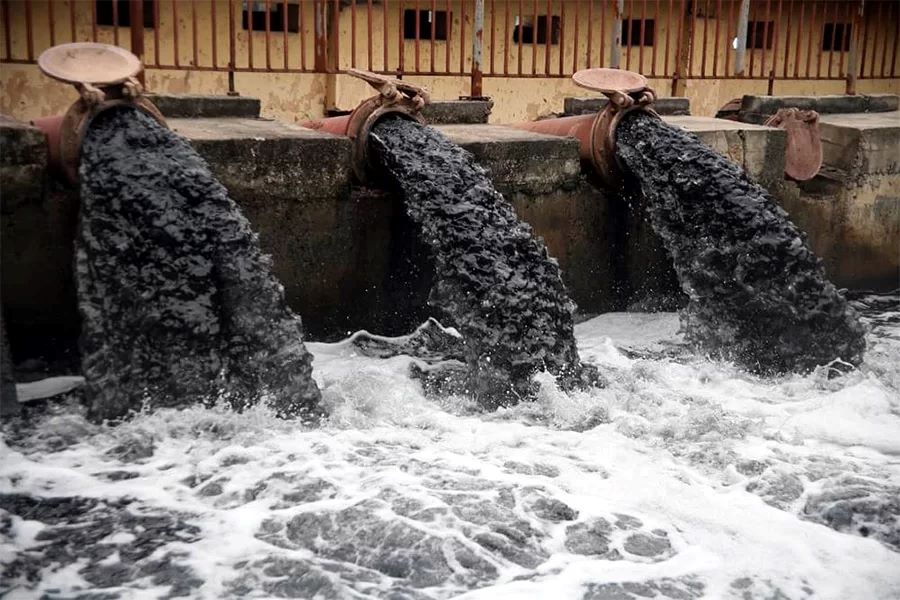
Treated wastewater appears black and foamy due to poor treatment performance
This is one of the easiest signs to recognize in the field. If the equalization tank, biological tank, or sludge holding tank emits a stronger odor than usual, especially a rotten egg smell, fishy smell, or strong decomposing organic odor, it is highly likely that the system is having problems in the biological treatment process or flow circulation.
Common causes include lack of oxygen in the tank, weak microbial activity, anaerobic sludge decomposition, or wastewater being retained too long in the tank without adequate recirculation or aeration. In many cases, foul odor is a sign that the microbial population has been shocked by loading conditions or that part of the biomass has died, causing a noticeable decline in treatment efficiency.
When the treated water turns black, dark yellow, abnormal green, or becomes cloudy, foamy, or develops an oil film on the surface, this is a sign that the system is not treating wastewater effectively. Abnormal effluent often reflects problems in one or more treatment stages such as coagulation, flocculation, sedimentation, oil separation, or biological treatment.
In actual operation, if the settling tank performs poorly, sludge does not settle properly, or microorganisms are washed out with the effluent, the treated water will become cloudier and show a more noticeable color than usual. If this condition persists, it may lead to the risk of the wastewater failing to meet the discharge standard applicable to the project.
Activated sludge is the “heart” of many biological treatment systems. When sludge does not flocculate well, remains highly suspended, floats on the tank surface, or forms patches, it is a sign that the microbial system is weakening. If the sludge color changes from yellowish-brown or chocolate-brown to dark gray, black, or emits a clear foul odor, the sludge may be suffering from oxygen deficiency, sludge aging, or toxic chemical impact.
Operators should also monitor parameters such as SV30, MLSS, and SVI to assess sludge condition. If SV30 changes abnormally, sludge settles too slowly, or the SVI is too high, the system may be experiencing sludge bulking, poor sludge settleability, or a decline in beneficial microbial density. These are very important technical warning signs that should be checked early.
In Aerotank or aerobic biological treatment tanks, dissolved oxygen plays an extremely important role in microbial activity. If aeration is weak, bubbles are uneven, dead zones appear in the tank, or the water turns darker with a foul odor, the air supply system should be checked immediately. In many cases, the blower is still running, but weak pressure, clogged diffusers, or leaking air pipelines result in insufficient oxygen for microbial activity.
Normally, DO in the biological tank should be maintained at a suitable level for aerobic microorganisms to grow stably. If DO remains too low for a prolonged period, the microbial population will weaken, the degradation of organic matter will drop sharply, and COD and BOD in the effluent will rise. This is a very common cause of foul-smelling wastewater and poor effluent quality after treatment.
In addition to direct observation, system problems can also be identified through operating data. If pH fluctuates sharply, ORP changes abnormally, or parameters such as COD, BOD, ammonia, and turbidity become unstable, this indicates that the treatment process is losing balance. In particular, for systems with anoxic–aerobic stages, ORP is a useful parameter for evaluating whether the reaction environment is appropriate.
When influent pH is too low or too high, microorganisms may be shocked, causing biological treatment efficiency to decrease rapidly. Similarly, if ORP does not remain within the appropriate operating range for each treatment stage, nitrification, denitrification, or organic degradation may occur inefficiently. Therefore, regular monitoring of operating data is essential for detecting abnormalities early before the problem becomes severe.
Electromechanical equipment is a category that often provides early warning signals. If a pump produces loud noise, strong vibration, abnormal heat, reduced flow, or intermittent operation, the system should be checked immediately for impeller wear, clogging, bearing failure, or electrical faults. Likewise, if a blower emits unusual whistling sounds, shows reduced pressure, or experiences high temperature, the system is likely unstable.
In addition, faults in the control panel such as relay trips, inverter alarms, sensor signal loss, or loss of communication between the control system and field equipment are also warning signs that must not be ignored. If not addressed early, equipment failures can interrupt the entire wastewater treatment process.
When pipelines or tank compartments are clogged, wastewater often flows slowly, rises to an abnormal level, overflows locally, or creates back pressure on equipment. This is a common phenomenon in systems that have not been cleaned for a long time, especially at points where trash, sediment, sludge, grease, or sludge flocs tend to accumulate.
If the sludge pump is running but sludge return flow is unstable, the settling tank fills with sludge too quickly, sludge is not discharged periodically, or the sludge holding tank emits a very strong odor, the business should immediately check for blockage or incorrect operating mode. Allowing this condition to persist not only reduces treatment efficiency but also shortens equipment life.
Foam in the biological tank is a very important field sign. If large amounts of thin white foam appear and persist, the microbial population may still be immature or the influent load may have changed suddenly. If thick, stable brown foam accumulates for a long time, the system may be facing problems related to aged sludge, filamentous microorganisms, or microbial imbalance.
Although not every foaming event is a serious problem, if it occurs together with foul odor, low DO, poor effluent quality, or poor sludge settling, the system should be checked immediately. This combination of warning signs is very typical of an unstable biological treatment process.

Đại Nam environmental engineers are in the process of surveying and upgrading a wastewater treatment system
Operators should regularly monitor parameters such as pH, DO, ORP, flow rate, SV30, MLSS, and effluent quality in order to detect unusual changes promptly. The more complete the operating data records are, the faster and more accurately the cause of the problem can be diagnosed.
Activated sludge should be observed for color, flocculation ability, settling rate, and odor. At the same time, related indicators should be checked periodically to detect early signs of young sludge, aged sludge, bulking sludge, or dead sludge. This is a very effective way to maintain stability in the biological treatment stage.
Pumps, blowers, pipelines, valves, electrical control panels, diffusers, and dosing pumps should be inspected and maintained according to a clear maintenance plan. At the same time, tanks should be cleaned, sludge should be removed, and accumulated debris and sediment should be cleared periodically to prevent clogging and reduce stress on the entire system.
Businesses should monitor changes in flow rate, pollutant concentration, and influent wastewater characteristics to avoid shock loading to the system. For wastewater sources with major fluctuations, solutions such as flow equalization, pH adjustment, or segregation of special waste streams should be considered before sending them to the main treatment system.
When signs such as foul odor, floating sludge, weak aeration, discolored effluent, or unusual equipment noise appear, the business should conduct a system survey as soon as possible. On-site inspection combined with operating data assessment will help determine the correct cause and avoid incorrect troubleshooting that wastes time and money.
With more than 13 years of experience in the environmental sector, Dai Nam Environmental Solutions Co., Ltd. provides surveying, inspection, root cause diagnosis, maintenance, and renovation services for wastewater treatment systems across many sectors, including factories, industrial parks, buildings, hospitals, residential areas, and production facilities. Đại Nam’s team of engineers can support sludge condition inspection, aeration efficiency assessment, electromechanical equipment review, operating data analysis, and the proposal of corrective solutions tailored to each system.
In addition to resolving immediate problems, Đại Nam also advises on long-term stable operating solutions to reduce the risk of recurring issues, optimize maintenance costs, and improve treatment efficiency. If your company’s wastewater treatment system is showing abnormal signs such as non-compliant effluent, dead activated sludge, unstable equipment operation, or persistent foul odors, please contact hotline 0909 378 796 for prompt survey and consultation support from Đại Nam.