Every day, residential areas and industrial factories generate large volumes of wastewater, making the need for effective treatment more urgent than ever. In the entire wastewater treatment process, there is one factor that is often overlooked but has a significant impact on system performance — temperature. Temperature directly affects chemical reactions, microbial activity, and overall treatment efficiency.
In the biological treatment stage (aerobic, anoxic, and anaerobic tanks), microorganisms play the main role in decomposing organic matter and removing pollutants. Temperature directly determines the rate and efficiency of these processes.
Warm temperatures help microorganisms become more active. The optimal temperature range is called the mesophilic zone, typically between 20–40°C. Within this range, microorganisms break down BOD and COD most effectively. At 50–60°C, thermophilic microorganisms develop strongly and help increase the decomposition rate. However, excessively high temperatures may:
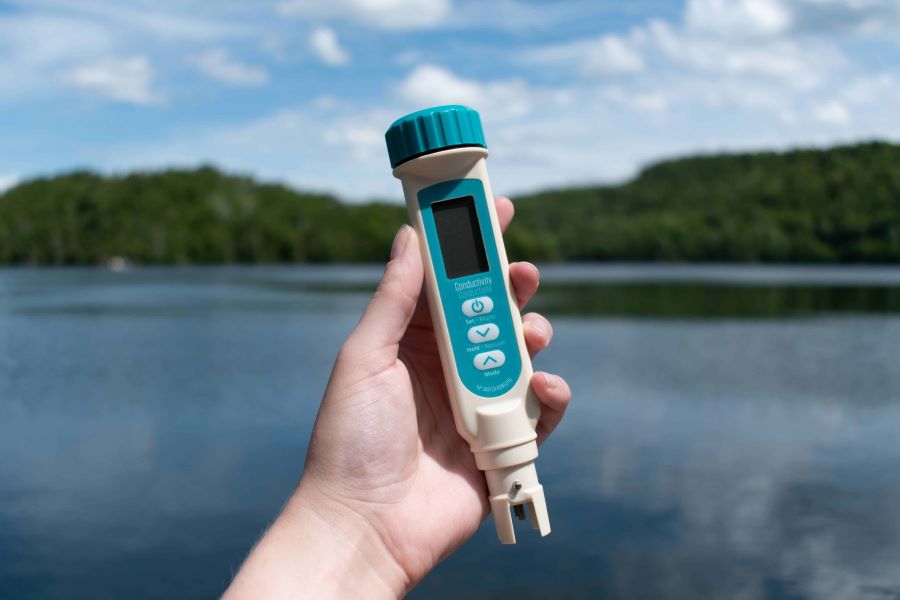
Temperature directly determines the rate and efficiency of wastewater treatment processes
Chemical precipitation is commonly used to remove heavy metals and phosphorus in wastewater. Low temperatures reduce the solubility of many compounds → increasing precipitation potential. This is beneficial when chemicals are used to remove pollutants. Higher temperatures accelerate reaction rates, but excessively high temperatures may cause side reactions and increase operating costs.
| Treatment stage | Temperature range |
Impact characteristics |
| Primary treatment | 20–40°C |
Mainly physical processes (sedimentation, filtration), less dependent on temperature |
| Secondary treatment (biological) | 20–40°C |
Temperature determines microbial efficiency in removing BOD, COD, N, P |
| Advanced treatment | Ambient temperature |
Impact depends on technology (coagulation, disinfection, precipitation) |
Managing temperature helps the system operate stably and save energy through the following solutions:
A plate heat exchanger allows heat transfer between two liquid streams without direct contact. This equipment helps adjust wastewater temperature quickly and effectively. Thanks to its large heat transfer surface area, the system significantly reduces operating energy consumption. This solution is particularly suitable for wastewater treatment plants that require stable temperature control.
A shell-and-tube heat exchanger has a durable structure that can withstand high pressure and temperature in industrial environments. The equipment consists of multiple small tubes placed inside a larger shell to perform heat exchange effectively. This system is suitable for large-scale wastewater treatment plants. Stable operation helps maintain optimal temperatures for biological and chemical processes.
Insulating pipelines, tanks, and equipment helps reduce heat loss in wastewater treatment systems. Covering open tanks also helps minimize the impact of external environmental conditions on water temperature. This solution is especially important in areas with cold climates or large temperature fluctuations. Maintaining stable temperatures significantly improves biological treatment efficiency.

Methods for controlling temperature in wastewater treatment systems
Integrating solar and wind energy helps provide heating or cooling for wastewater treatment systems. This solution reduces dependence on fossil fuels and lowers operating costs. Renewable energy systems also help reduce greenhouse gas emissions into the environment. This is a suitable approach aligned with current sustainable wastewater treatment trends.
Treated wastewater still contains a certain amount of heat that can be reused. Heat recovery systems allow this heat to be transferred to warm the incoming wastewater. This solution significantly reduces the energy required to reach the desired operating temperature. Reusing heat also improves the overall efficiency of the entire treatment system.
Temperature is one of the operational factors that directly affect the performance of the entire wastewater treatment system. Temperature fluctuations can change the rate of biological and chemical reactions in treatment stages. Therefore, proper temperature management helps the system operate more stably, safely, and sustainably.
Temperature is an important technical factor but is often overlooked in the design and operation of wastewater treatment systems. Applying solutions such as heat exchange, insulation, and energy recovery helps improve treatment efficiency, reduce costs, and move toward green and sustainable operation.