Floating sludge in the clarifier is a common issue during the operation of biological wastewater treatment systems. The phenomenon can appear as patches of floating sludge, small suspended sludge flocs, or sludge being washed out with the effluent, thereby increasing TSS.
However, floating sludge is only an external symptom and can stem from many different causes. Therefore, instead of immediately increasing aeration, adding microorganisms, altering the return sludge rate, or using chemicals, it is necessary to determine the actual condition of the sludge and the clarifier before adjusting the system.
In an activated sludge system, the mixture of sludge and water after the biological treatment process is transferred to a clarifier to separate the biomass from the water. Sludge flocs with good settling capabilities will concentrate at the bottom of the tank. A portion of the sludge is returned to the biological tank to maintain biomass, while the excess sludge is removed from the system.
When the settling process is unstable, sludge may appear on the surface or be carried away by the effluent. However, it is necessary to distinguish between two phenomena that are often collectively referred to as floating sludge.
The first case is when the sludge settles slowly right from the beginning, the flocs are light and dispersed, or the sludge blanket occupies a large volume, causing poor solid-liquid separation.
The second case is when the sludge initially settles but then floats back to the surface after a period of time. This case is usually related to gas formation within the sludge layer, typically due to denitrification occurring in the clarifier.
The two phenomena can look quite similar upon direct observation, but their causes and treatment approaches are different. Therefore, it is necessary to monitor the settling process and combine it with operational data before selecting an adjustment measure.
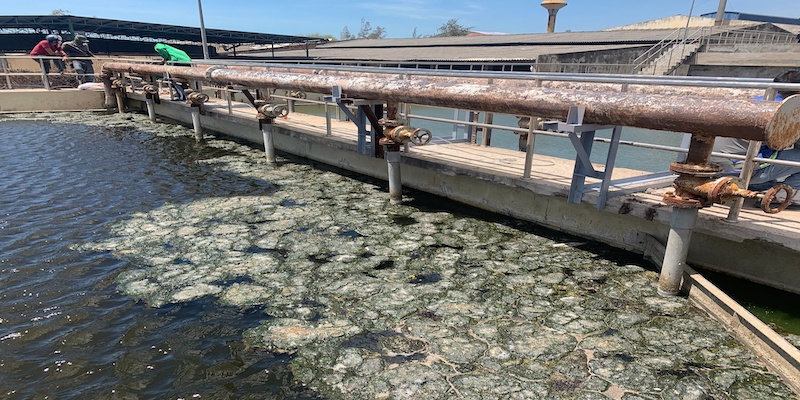
Filamentous bacteria are one of the main culprits causing biological sludge to float
Floating sludge does not always originate from a single cause. In addition to activated sludge characteristics, hydraulic conditions, the amount of solids entering the clarifier, and the sludge collection – return – wasting regime can all affect settling capability.
When Nitrate-containing water from the biological tank enters the clarifier, the sludge layer remaining in oxygen-deficient conditions can facilitate the denitrification process. Nitrate is converted and ultimately forms Nitrogen gas (N₂).
The tiny gas bubbles formed can attach to the sludge flocs, causing the already settled sludge to float back to the surface. This phenomenon is usually identified when the sludge initially settles relatively well but after a while begins to float up in patches, possibly accompanied by small bubbles.
The mechanism can be visualized as:
NO₃⁻ → Denitrification → N₂↑ → Gas bubbles attach to flocs → Floating sludge
Therefore, if the sludge settles well at first but then floats back up, priority should be given to checking for denitrification rather than immediately concluding that the sludge has poor settling capabilities.
Another scenario is that the activated sludge itself does not possess good settling capabilities. Sludge flocs might be light, settle slowly, or form a spongy sludge layer that occupies a large volume, making the solid-liquid separation process in the clarifier inefficient.
The overgrowth of filamentous bacteria is one of the causes that can trigger sludge bulking and reduce the settling and compaction capabilities of the sludge. When bulking occurs, the settled sludge volume usually increases while its compaction ability decreases.
However, settling capability is also influenced by organic load, oxygen conditions, sludge age, nutrients, wastewater characteristics, and many other operational factors. Therefore, one should not solely rely on the floating sludge phenomenon or SV30 results to conclude that filamentous bacteria are the cause.
It is necessary to combine SV30, SVI, sludge floc characteristics, and operational data to pinpoint the cause.
Sludge does not always float in large patches. Small, dispersed, or poorly flocculated sludge particles can remain suspended in the water and follow the current out of the clarifier.
In some cases, the appearance of many tiny sludge flocs can be described as pin floc. The settled water often contains many fine particles and its clarity is reduced, but the sludge layer does not necessarily exhibit clear signs of bulking.
This condition must be distinguished from bulking sludge and floating sludge caused by denitrification. Misidentifying the cause can lead to inappropriate adjustments in sludge volume, aeration, or chemicals, causing the system to further fluctuate.
Separation capability depends not only on sludge floc characteristics but is also affected by hydraulic conditions and the amount of solids entering the clarifier.
When the water flow rate spikes or flow distribution is uneven, the sludge may be swept away by the current before it has enough time to settle. This phenomenon is often more pronounced during sudden flow increases or when the equalization tank fails to properly control the transfer flow.
Besides the hydraulic load, the solids loading entering the clarifier must also be considered. When high MLSS is combined with high flow rates, the amount of solids transferred to the clarifier increases, raising the demand for sludge settling and compaction. If this exceeds the tank's capacity, the sludge blanket can rise, and solids will be washed out with the effluent.
Therefore, when an issue arises during periods of high flow or increased MLSS while the sludge's settling capability remains relatively unchanged, it is necessary to check the actual load on the clarifier rather than focusing solely on adjusting the microbial system.
Sludge that has settled to the bottom must be removed at an appropriate rate. If sludge accumulates heavily and is not recovered in time, the depth of the bottom sludge blanket increases, and the sludge retention time in the clarifier is prolonged. This can increase the risk of sludge washout or create conditions for the sludge to float back up.
The return activated sludge (RAS) flow rate affects the ability to remove sludge from the clarifier bottom and maintain the sludge blanket at an appropriate level. Meanwhile, the waste activated sludge (WAS) volume affects the total biomass and sludge age of the entire system.
Therefore, sludge return and wasting must be considered based on the actual status of the system rather than being simultaneously increased or decreased the moment floating sludge appears.
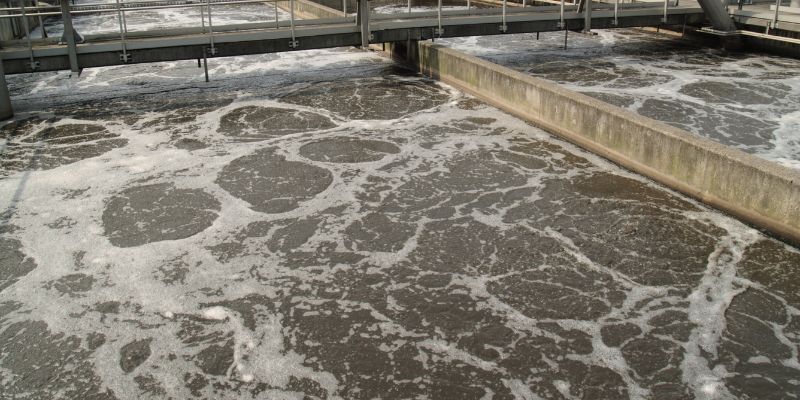
Choosing the right type of chemical and proper dosage is crucial for ensuring efficiency
When floating sludge is detected, the first step is not to adjust the equipment but to determine the mechanism causing the sludge to float.
First, observe the clarifier directly: does the sludge float immediately or after some time, does it float in patches or as small flocs, are there accompanying gas bubbles, is the effluent carrying sludge, and what is the level of the bottom sludge blanket?
Next, perform an SV30 settling test on a sludge sample taken from the biological tank. Besides the sludge volume after 30 minutes, observe the settling speed, the interface between sludge and water, the clarity of the supernatant, the sludge floc structure, and whether the sludge floats back up after settling.
From the initial observation results, proceed to check relevant parameters such as SVI, MLSS, DO, Nitrate, wastewater flow rate, return sludge volume, and the current waste sludge volume. Simultaneously, check the sludge blanket height in the clarifier, influent flow, effluent weir, and the bottom sludge removal capacity.
Some signs that can help narrow down the cause:
| Observed Phenomenon | Priority Area to Check |
| Sludge settles down then floats back up, with gas bubbles | Denitrification process |
| Sludge settles slowly, spongy sludge layer occupying large volume | Sludge settling capability |
| Small sludge flocs, turbid settled water | Floc formation status |
| Sludge washed out when flow rate increases | Hydraulic load and flow distribution |
| Abnormally high bottom sludge blanket | Sludge collection, return, and wasting |
The signs above only serve to guide the inspection. It is necessary to combine real-world phenomena with operational data before identifying the cause and modifying the system.
When floating sludge increases effluent solids or causes biomass loss, it is necessary to curb the loss of biomass and stabilize the clarifier's operation. Afterwards, adjustment strategies must be based on the identified cause rather than applying a blanket solution for every case.
The treatment strategy should focus on preventing the sludge from staying too long in the clarifier. Maintain the bottom sludge blanket at a suitable level and adjust the collection and return regimes to avoid prolonged sludge accumulation.
Additionally, review the Nitrogen treatment process in the preceding stages. The goal is not to prevent denitrification but to create conditions for this process to occur in the stage specifically designed for it, rather than happening in the clarifier and causing sludge to float.
The treatment approach depends on the factor degrading the settling capability. If related to oxygen conditions, organic load, or sludge age, the corresponding parameters should be adjusted step by step while monitoring the microbial system's response.
If an overgrowth of filamentous bacteria is determined, prioritize eliminating the conditions favoring their growth. Adding microorganisms or increasing aeration should not be applied as default solutions without a clear cause.
For small flocs, adjustments should focus on restoring conditions for stable floc formation. The biomass maintenance and wasting regimes must be suitably adjusted, avoiding overly rapid changes in sludge volume that could cause further system fluctuations.
If the condition appears after a major change in influent flow or load, the wastewater source must be stabilized concurrently with evaluating the effectiveness of adjustments in the biological tank.
In this case, altering the microbial system usually does not resolve the root cause. The treatment strategy should focus on stabilizing the flow through the clarifier.
Consider reviewing the equalization tank's operating mode, transfer pumps, influent distribution, and effluent weirs to limit sudden flow spikes or uneven currents. If the actual flow frequently exceeds the clarifier's capacity, reassess the structure's handling capacity rather than just adjusting operations.
When the bottom sludge layer rises too high, ensure the sludge collection system is operating normally and adjust the return and wasting regimes to match the actual biomass.
The goal is to prevent sludge from sitting too long in the clarifier while still maintaining enough necessary biomass for the biological treatment process. Therefore, do not drastically increase sludge wasting solely to quickly reduce the bottom blanket without considering the system's overall status.
In some cases, PAC or polymers can be considered as supportive measures for sludge separation. However, chemicals do not replace treating the root cause. If the issue stems from denitrification, hydraulic overload, or return/wasting regimes, relying solely on chemicals might improve separation temporarily but will not prevent the issue from recurring. When chemical support is needed, run trials to determine the appropriate dosage before applying it to the actual system.
When floating sludge appears, do not simultaneously increase aeration, add microorganisms, alter return/waste sludge volumes, and use chemicals. Adjusting multiple factors at once can cause the system to fluctuate and make it difficult to determine which measure actually triggered a change.
Similarly, PAC or polymers should only be viewed as supportive solutions in appropriate cases, not as a replacement for identifying the root cause. The proper sequence is to observe the phenomenon, check relevant parameters, determine the cause, make step-by-step adjustments, and continue monitoring the results.
Floating sludge in biological clarifiers can stem from various causes such as denitrification, degraded sludge settling capability, small flocs, hydraulic loads, or inappropriate return/wasting regimes. Therefore, while the symptom of floating sludge is the same, the treatment strategies can be completely different.
Instead of adjusting the system based on instinct the moment an issue arises, it is essential to observe the settling process, check the sludge condition and operating parameters to pinpoint the cause before taking action. This approach helps minimize unnecessary adjustments and reduces the likelihood of the problem recurring.