MBR technology, with its ultra-small membrane pores, is capable of retaining almost all activated sludge and microorganisms, significantly improving the quality of treated water. In the context of increasingly strict discharge requirements and limited construction land, MBR is becoming a solution that many businesses are interested in. So what is MBR, and in which cases does this technology truly provide superior efficiency compared to conventional biological systems?
MBR (Membrane Bioreactor) is a wastewater treatment technology that combines an aerobic biological tank with a membrane filtration system. Instead of using a traditional settling tank to separate sludge from treated water, MBR uses membrane filters (usually hollow fiber membranes or flat sheet membranes) to retain activated sludge and microorganisms directly inside the biological tank. As a result, treatment and phase separation occur simultaneously, helping the system operate more stably and efficiently.
As a result, the treated water has very high clarity, removing almost all suspended solids (SS) and bacteria. The effluent quality is often sufficient for reuse purposes such as irrigation, toilet flushing, cooling water makeup, or other technical needs, depending on the specific requirements of the project.
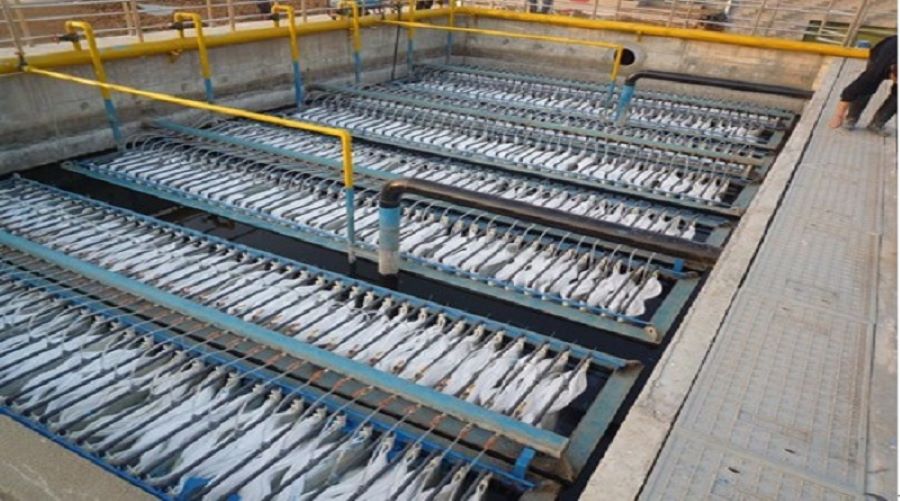
MBR is a wastewater treatment technology that combines an aerobic biological tank with membrane filtration
Below is a quick comparison between MBR technology and conventional biological tanks to help illustrate the key differences. The comparison table focuses on important factors such as land area, effluent quality, and cost.
| Criteria | Conventional biological tank | MBR |
| Sludge separation mechanism | Secondary settling tank | Membrane filtration |
|
Construction area |
Large | Reduced by about 30–50% |
| Effluent quality | Fair | Very high, stable |
| Reuse capability | Limited | Very good |
| Investment cost | Lower | Higher |
| Operation requirement | Relatively simple | Requires higher technical expertise |
MBR is not always the cheapest option, but in many specific cases it can provide superior long-term economic efficiency. Below are typical situations where investing in MBR becomes more beneficial compared to conventional biological systems.
In projects located in urban areas, inner-city hospitals, or factories in already fully occupied industrial parks, expanding traditional settling tanks is often difficult. MBR technology allows biological treatment and sludge separation to be integrated into a single system, significantly reducing construction area (usually by 30–50%), thereby optimizing site space and infrastructure investment costs.
For projects that must meet strict discharge standards or require water reuse, MBR shows clear advantages. The membrane system can remove almost all suspended solids and microorganisms, making effluent quality more stable and less dependent on operating conditions compared with traditional settling tanks.
When an existing treatment plant becomes overloaded but site expansion is not possible, MBR is an effective retrofit solution. This technology allows operation at high activated sludge concentrations (high MLSS), thereby increasing treatment capacity within the existing tank volume without requiring large-scale new construction.
In areas with strict environmental regulations, ensuring stable effluent quality is a key factor. Thanks to membrane separation, MBR is less dependent on sludge washout or hydraulic fluctuations compared with conventional settling systems, thereby helping businesses reduce the risk of violating discharge standards.
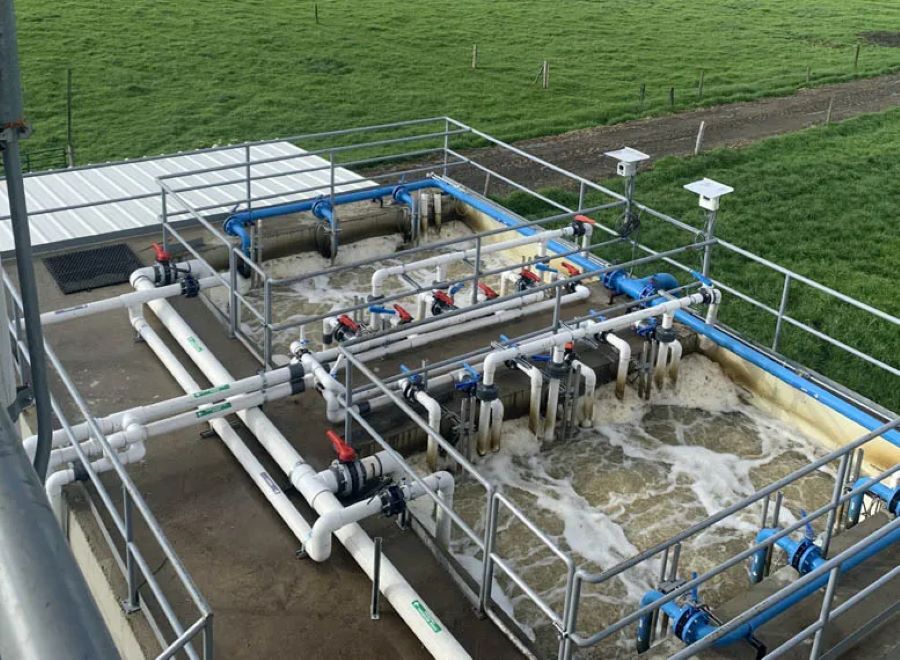
Why does investing in MBR become more beneficial compared to conventional biological tanks?
In summary, MBR is a modern wastewater treatment solution that provides high efficiency and superior effluent quality compared with conventional biological tanks. Although the initial investment cost is higher, in cases requiring strict discharge standards, water reuse, or limited construction space, MBR is well worth the investment. Choosing the appropriate technology should be based on actual needs, long-term operational goals, and the overall economic considerations of each project.