Metalworking wastewater is considered one of the most difficult industrial wastewater streams to treat because it simultaneously contains emulsified oil, cleaning chemicals, and heavy metals generated from processes such as cutting, grinding, polishing, and metal surface treatment. The wastewater characteristics often fluctuate significantly in terms of pH, high COD concentration, difficult-to-separate oil, and hazardous sludge generation, causing many treatment systems to operate unstably. Therefore, selecting the right treatment technology and process is a critical factor in ensuring the treated effluent meets current environmental standards.
Wastewater from the mechanical and metal fabrication industry is commonly generated from production stages such as metal cutting, degreasing, grinding, polishing, machine cleaning, and metal surface treatment. The wastewater typically contains high pollution loads and continuously fluctuates depending on each production stage.
Common pollutants include:
Among these pollutants, emulsified oil and heavy metals are the most difficult to treat. Emulsified oil exists in the form of extremely fine oil droplets stabilized by surfactants, making it difficult to remove through conventional sedimentation methods. Meanwhile, heavy metals are non-biodegradable and may become toxic to microorganisms when present at high concentrations. This is also why many metalworking wastewater treatment systems frequently encounter issues such as poor oil separation, high effluent COD, or poorly settling flocs when the physico-chemical treatment stage is not properly controlled.
In addition, metalworking wastewater often experiences large pH fluctuations between rust removal, cleaning, and surface treatment processes, which can destabilize the entire treatment system if an adequate equalization tank is not provided.
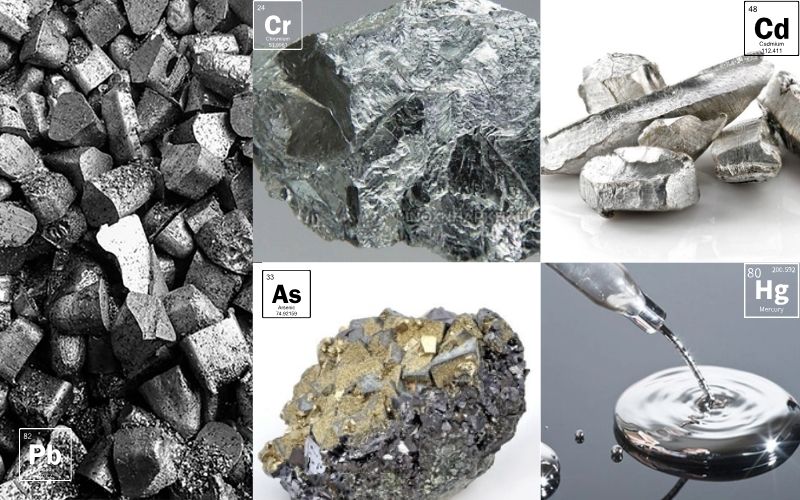
Characteristics of wastewater from metal processing
Due to the complex characteristics of this wastewater, metalworking wastewater treatment systems usually combine multiple technologies to remove emulsified oil, heavy metals, and dissolved pollutants.
This is the most important technology in metalworking wastewater treatment. The process typically includes:
In metalworking wastewater treatment, the physico-chemical stage plays a vital role because most heavy metals and emulsified oils cannot be effectively treated by conventional biological methods.
During the neutralization stage, chemicals such as NaOH or Ca(OH)₂ are commonly used to increase the pH, allowing dissolved metals to convert into insoluble hydroxides that can be more easily separated from the wastewater.
For wastewater containing high concentrations of emulsified oil or industrial oil, Dissolved Air Flotation (DAF) systems are commonly used to improve oil and suspended solids removal efficiency. This technology helps reduce the load on downstream physico-chemical processes and enhances COD treatment performance.
For wastewater with high emulsified oil content, combining demulsification and DAF flotation can significantly reduce oil concentration and minimize negative impacts on the downstream biological treatment system.
After the physico-chemical process, the wastewater is usually further treated biologically to reduce COD, BOD, and remaining dissolved organic compounds. Depending on pollution load and available installation area, technologies such as AO, MBBR, or Aerotank may be applied to maintain stable treatment efficiency under fluctuating influent conditions.
A typical metalworking wastewater treatment system generally follows the process below:
Collection → Oil Separation → Equalization → pH Neutralization → Coagulation & Flocculation → Physico-Chemical Sedimentation → Biological Treatment → Sedimentation → Disinfection → Discharge
Functions of Each Treatment Tank:
Depending on actual wastewater characteristics, some systems may incorporate additional processes such as demulsification, DAF flotation, or oxidation to improve the removal efficiency of emulsified oil and refractory COD.
%20(2).jpg)
Wastewater treatment technology for metal processing
4. Common Operational Problems
During operation, metalworking wastewater treatment systems often encounter the following issues:
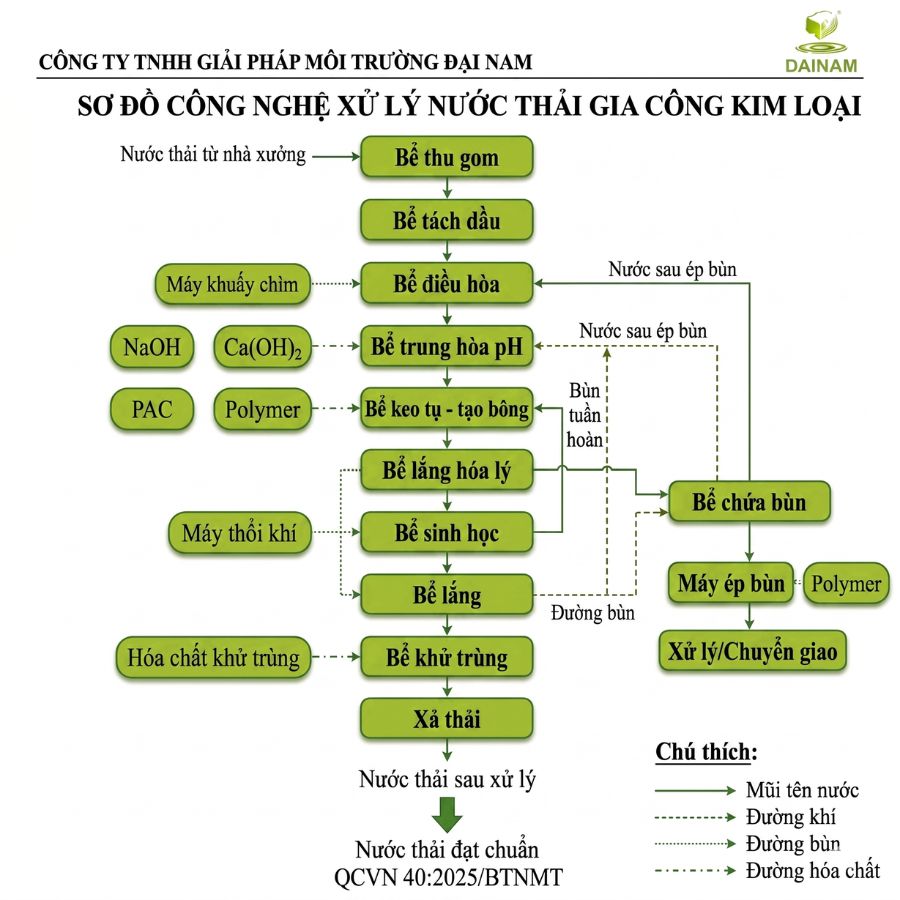
Wastewater treatment process for metal processing using storage tanks.
Depending on the production type and receiving water source, treated metalworking wastewater is generally required to comply with national technical regulations on industrial wastewater according to environmental permits and current regulations. Some parameters that are often difficult to achieve include:
Due to the presence of emulsified oil, heavy metals, and high COD concentration, metalworking wastewater requires a treatment system specifically designed for each actual production process. Đại Nam currently provides surveying, design, and upgrading services for mechanical and metalworking wastewater treatment systems with a focus on stable operation, chemical optimization, and compliance with current environmental regulations.