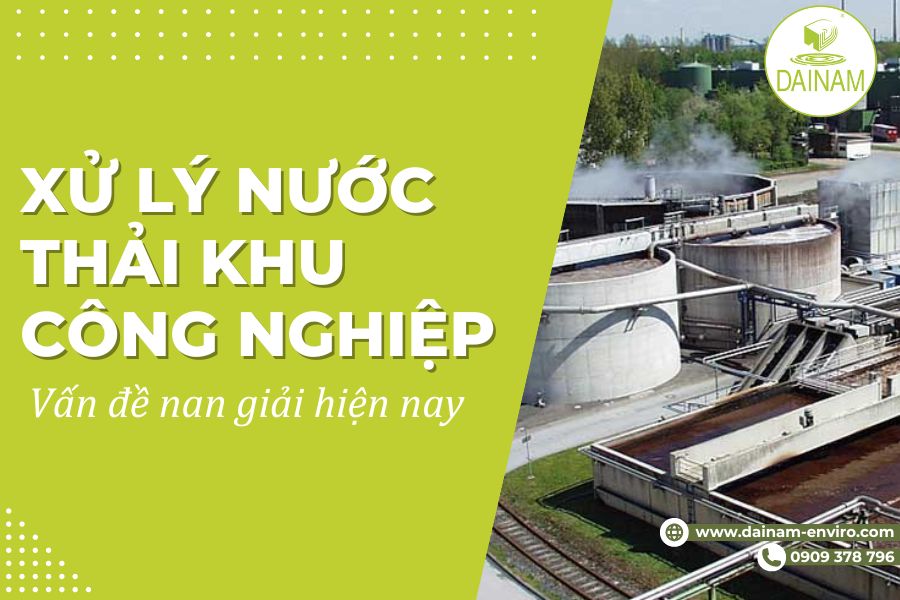
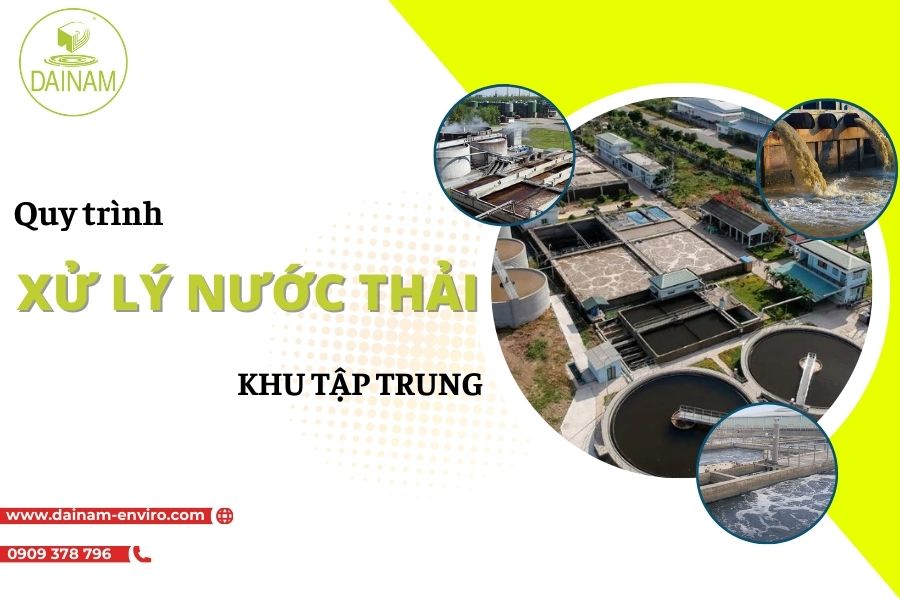
In the context of increasing industrialization, environmental pollution—especially industrial wastewater—has become a major challenge for many countries. Unlike domestic wastewater, wastewater from factories and industrial facilities contains many toxic, hard-to-degrade components and fluctuates depending on production processes. Therefore, treating this type of wastewater not only requires advanced technology but also a deep understanding of the characteristics of the wastewater source. So why is industrial wastewater difficult to treat, and what are effective solutions?
Industrial wastewater is water generated during production and processing activities in factories, plants, and industrial zones. Unlike domestic wastewater, industrial wastewater often contains complex impurities such as chemicals, oil and grease, heavy metals, and refractory organic compounds. This type of wastewater appears in most industries such as chemical production, textile dyeing, metallurgy, food processing, etc., with characteristics varying depending on technology and raw materials used.
In terms of composition, industrial wastewater may include suspended solids (TSS), organic matter (BOD, COD), heavy metals (lead, mercury, cadmium), oil and grease, microorganisms, and other toxic compounds. The main sources come from raw material washing, equipment cooling, chemical reactions, or cleaning of production lines. The diversity and variability of these components make industrial wastewater treatment complex and require appropriate technologies to meet environmental standards.
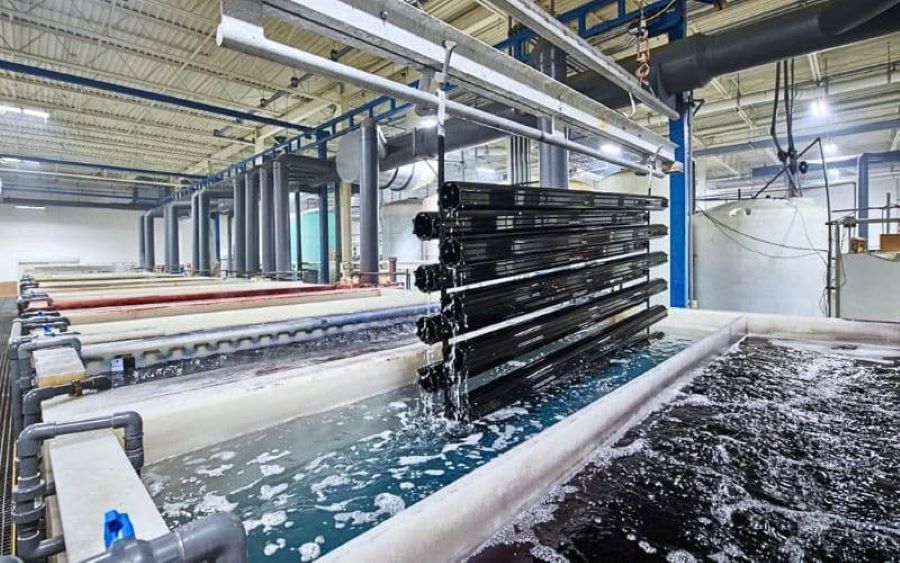
Industrial wastewater is generated during production and processing in factories, plants, and industrial zones.
Industrial wastewater is considered one of the most difficult types of wastewater to treat due to its complexity and continuous variation. This requires treatment systems to be specifically designed and carefully operated to ensure effectiveness.
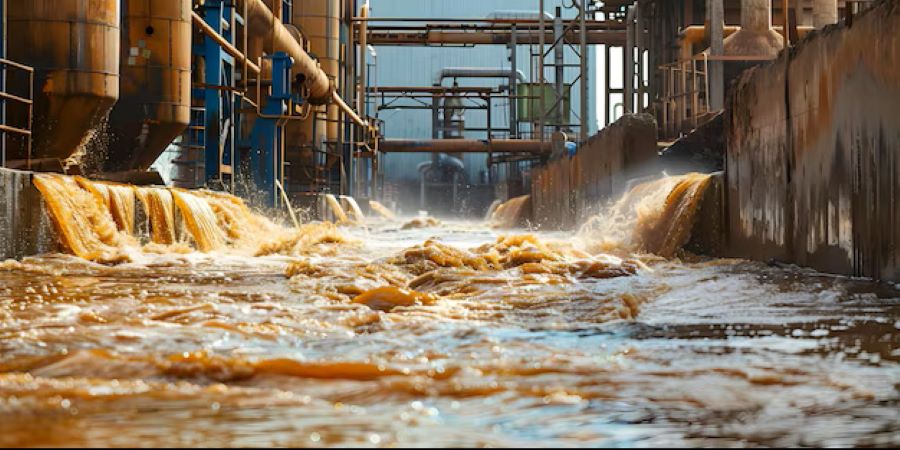
Industrial wastewater is considered one of the most difficult types of wastewater to treat today.
Industrial wastewater treatment not only requires suitable technology but also faces many operational challenges. These difficulties directly affect treatment efficiency as well as business costs.
Industrial wastewater treatment systems often require large initial investment due to the integration of multiple technologies. In addition, operating costs such as electricity, chemicals, maintenance, and labor are relatively high. This creates significant financial pressure, especially for small and medium enterprises.
Each type of industrial wastewater has its own characteristics, requiring appropriate treatment technologies and sometimes a combination of multiple methods. System design and operation become complex and require accurate calculations to ensure efficiency. If the wrong technology is selected, the system may not achieve the desired performance.
To operate treatment systems effectively, businesses need highly skilled and experienced technical staff. Monitoring and adjusting parameters such as pH, flow rate, and pollutant concentration require deep understanding of the process. Lack of qualified personnel can lead to errors and reduced treatment efficiency.
During operation, treatment systems may encounter issues such as overload, clogging, equipment failure, or microbial imbalance. These incidents not only disrupt operations but may also result in non-compliant discharge. Therefore, regular inspection and maintenance plans are necessary to minimize risks.
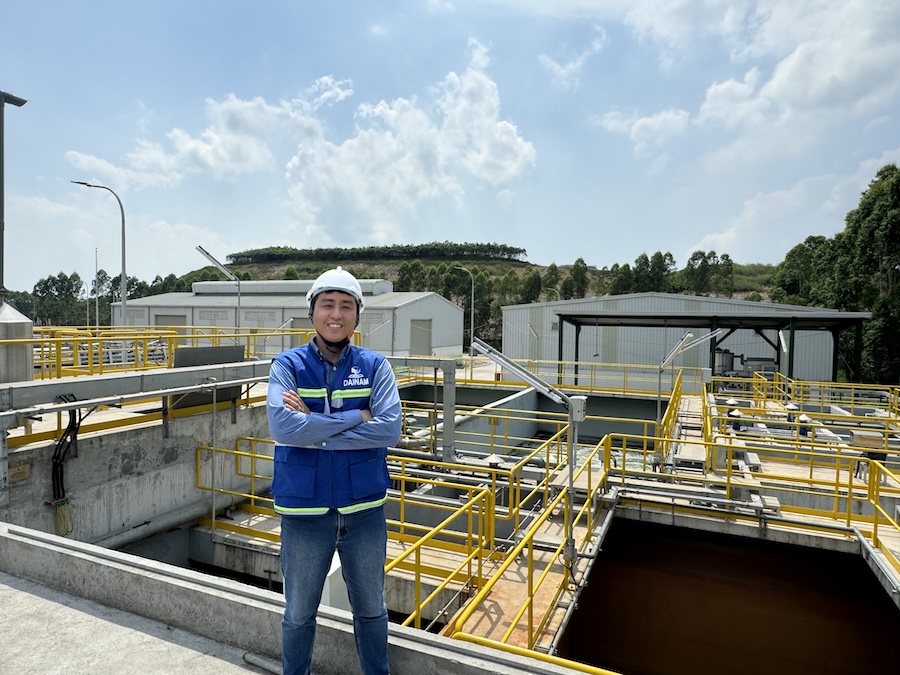
Industrial wastewater treatment requires appropriate technologies for practical operation.
To effectively treat industrial wastewater, businesses apply different methods depending on wastewater characteristics. Among them, conventional processes, MBBR, SBR, etc., are widely used due to their high efficiency and ability to treat organic matter effectively.
AAO (Anaerobic – Anoxic – Oxic) is a traditional biological treatment process consisting of three stages: anaerobic, anoxic, and aerobic. In the anaerobic tank, bacteria break down organic compounds and release phosphorus; in the anoxic tank, denitrification occurs; and in the aerobic tank, microorganisms oxidize organic matter and convert ammonia into nitrate. AAO has advantages such as low investment and operating costs and ease of application, but its performance depends heavily on operating conditions and requires relatively large space.
MBR (Membrane Bioreactor) combines an aerobic biological tank with a membrane filtration system to separate sludge from treated water. Thanks to the very small pore size of membranes, MBR produces high-quality effluent, effectively removing suspended solids, bacteria, and some viruses. This technology is suitable for water reuse systems or limited space. However, high investment and operating costs, especially membrane replacement and cleaning, are major drawbacks.
MBBR (Moving Bed Biofilm Reactor) uses freely moving plastic carriers in the tank for microorganisms to attach and grow as biofilm. This increases microbial density compared to traditional activated sludge systems, improving treatment efficiency and reducing tank volume. MBBR has good load tolerance, stable operation, and is less affected by load fluctuations. However, initial investment costs for carriers and aeration systems can be higher than conventional technologies.
SBR (Sequencing Batch Reactor) is a batch treatment system in which stages such as filling, biological reaction, settling, and discharge occur sequentially in a single tank. Advantages include space saving, operational flexibility, and ease of adjusting treatment phases to effectively remove nitrogen and phosphorus. However, the system requires good automation and precise operation cycles; otherwise, failures may affect effluent quality.
In addition to the above common technologies, various other solutions can be applied depending on wastewater characteristics:
In addition, selecting a reliable solution provider plays a key role in long-term treatment efficiency. Đại Nam wastewater treatment systems are trusted by many businesses thanks to the application of advanced technologies, flexible design tailored to each industry, and optimized operating costs. With an experienced engineering team, we not only provide systems that meet discharge standards but also offer comprehensive consulting, operation, and maintenance support. As a result, businesses can confidently control wastewater quality, comply with environmental regulations, and move toward sustainable development.