The growth rate of this type of business has spread across the country, especially developing strongly in densely populated cities and areas with strong tourism advantages. However, such rapid development has also led to significant impacts from wastewater discharged into the environment. Due to the large volume of wastewater released and the fact that many restaurants still have not built standard wastewater treatment systems. With the emergence of many modern water treatment technologies, wastewater issues at restaurants are gradually being addressed. So, what is the most effective restaurant wastewater treatment method today? Let Dai Nam explore this topic in the article below.
Along with the strong growth of the food and beverage service sector, the restaurant industry is expanding in scale and attracting significant investment capital, including from foreign enterprises. This development contributes positively to Vietnam’s economy, but it also brings environmental challenges. One notable issue is the volume of wastewater generated from restaurants being discharged into the environment without proper treatment standards. Therefore, investing in and implementing restaurant wastewater treatment systems has become an urgent requirement. Before developing suitable solutions, it is necessary to understand the sources of wastewater generated during operations.
Basically, wastewater from restaurants and eateries mainly originates from the following three sources:
Identifying the characteristics and sources of wastewater helps restaurants choose more effective and sustainable environmental management solutions in the long term.
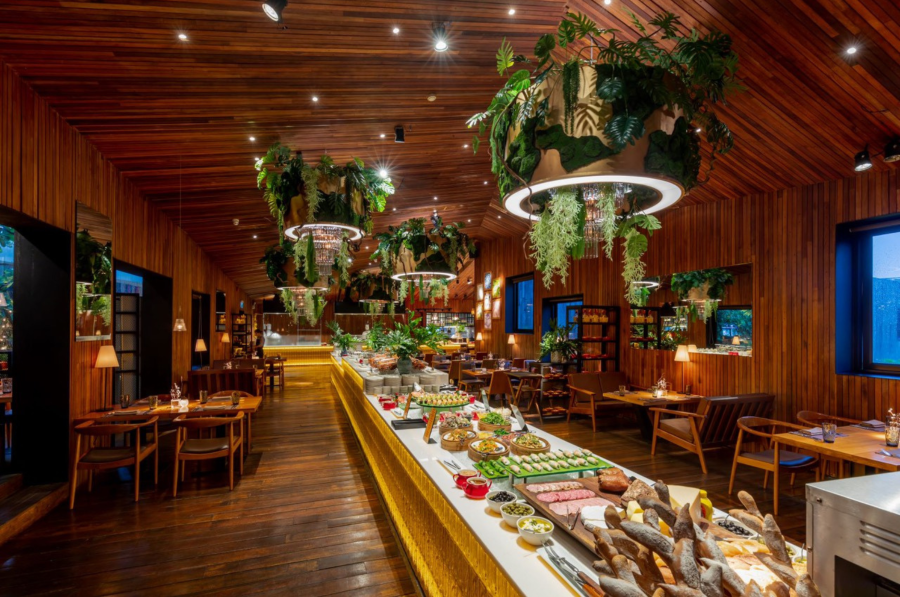
One notable issue is the volume of wastewater generated from restaurants being discharged into the environment without meeting proper standards
Correctly identifying wastewater characteristics is a fundamental step in selecting restaurant wastewater treatment solutions that are both effective and cost-efficient. When the composition and pollution level of the wastewater source are clearly understood, the technical measures applied will better match actual operational conditions.
Wastewater from restaurant operations generally has the following characteristics:
When implementing a restaurant wastewater treatment project, specialized units usually perform the following steps:
To ensure treated wastewater meets environmental standards, restaurant wastewater treatment systems are often designed as a sequence of combined mechanical and biological treatment units. Each component performs a specific function, supporting one another to improve overall efficiency.
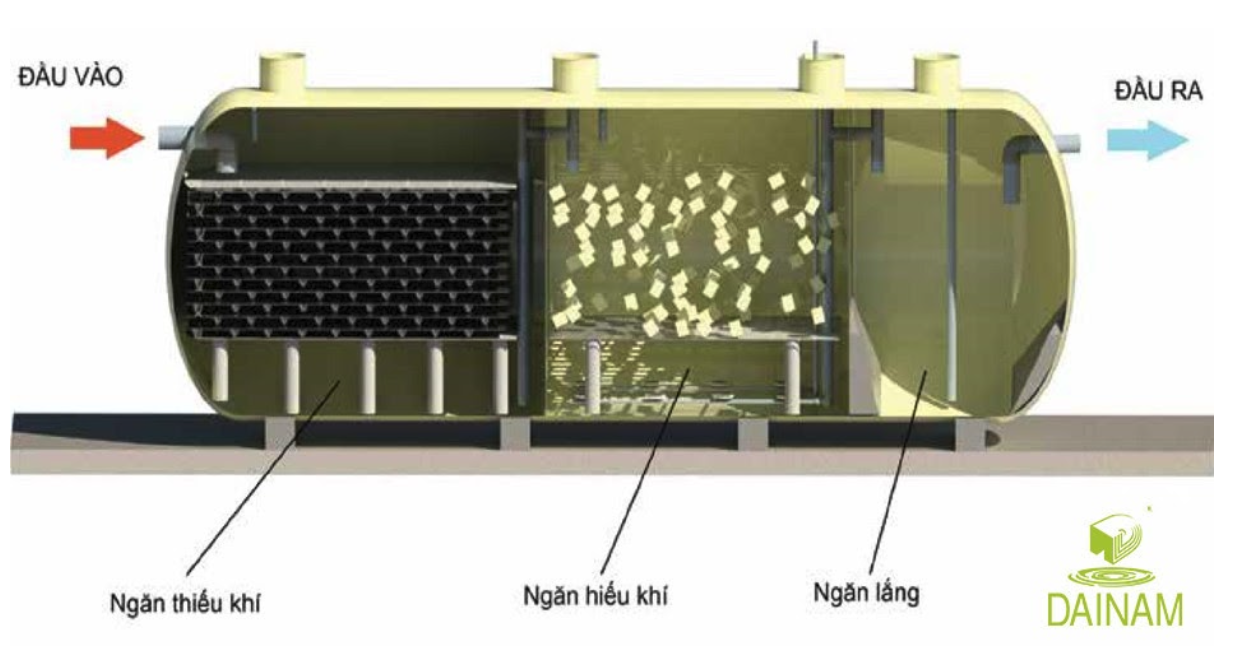
Overview of restaurant wastewater treatment processes that meet standards
The bar screen functions to remove coarse waste and large debris such as food scraps, packaging materials, and solid objects. Removing waste at the initial stage helps prevent pipe and pump blockages and protects downstream treatment units. The collected waste is then gathered and disposed of according to regulations.
Due to the nature of food processing activities, restaurant wastewater contains a high concentration of grease. A grease trap tank is installed to remove grease before the wastewater enters subsequent treatment stages, thereby reducing adhesion, clogging, and performance decline in the system. The tank design must match the flow rate and wastewater characteristics to ensure effective grease separation.
At the equalization tank, the flow rate and pollutant concentration in wastewater are balanced before moving to subsequent treatment processes. A mixing system is installed to prevent sedimentation while also preventing anaerobic decomposition that causes odors and toxic gas formation.
The anoxic tank is responsible for nitrogen removal through the denitrification process. Under oxygen-deficient conditions, denitrifying microorganisms convert nitrate in the incoming wastewater and recycled flow from the aerobic tank. To achieve high efficiency, a suitable substrate ratio must be maintained for stable microbial activity.
After the anoxic tank, wastewater flows into an aerobic biological tank applying MBBR (Moving Bed Biofilm Reactor) technology. Inside the tank, moving bio-carriers are continuously aerated, allowing aerobic microorganisms to attach and grow at high density.
The aeration process provides oxygen for microorganisms to break down organic matter while keeping the carriers suspended, increasing contact between microorganisms and wastewater. The biofilm layer on the carrier surface grows rapidly; when it becomes too thick, older microorganisms detach and flow out with the water, helping maintain biological balance in the tank. In addition to reducing COD and BOD, nitrification and denitrification processes also occur here, helping remove nitrogen and phosphorus compounds.
Wastewater after biological treatment is directed to the sedimentation tank to separate microbial sludge from the water. The settled sludge at the bottom is collected and transferred to the sludge storage tank for treatment, while the clarified water continues to the final stage.
At the final stage of the restaurant wastewater treatment system, the clarified water is disinfected to eliminate remaining bacteria and microorganisms. The treated effluent must comply with QCVN 14:2008/BTNMT before being discharged into the environment or reused.
Dai Nam is a company with many years of experience in consulting, designing, and constructing composite tanks for environmental projects. With a highly skilled engineering team and a well-structured working process, Dai Nam provides suitable solutions for various models, especially restaurant wastewater treatment systems ranging from small to large scale. The composite tanks supplied by the company have high durability, easy installation, and effectively meet technical requirements as well as current environmental standards.
If customers have any questions regarding the above information or wish to learn more about restaurant wastewater treatment methods, please contact us via hotline: 0909 378 796.