A water filtration column is an important device in wastewater treatment systems, playing the role of removing impurities that remain after mechanical and biological treatment processes. This equipment operates based on the principle of allowing water to pass through layers of filter media such as sand, gravel, activated carbon, or other specialized materials to retain suspended solids, organic substances, heavy metals, and some harmful microorganisms. As a result, the quality of treated water is significantly improved, meeting discharge standards or reuse requirements. With a relatively simple structure but high efficiency, the water filtration column is an indispensable component in modern wastewater treatment processes.
A water filtration column is a device used in wastewater treatment systems to remove impurities that remain after preliminary and biological treatment stages. This equipment operates based on the principle of allowing water to pass through layers of specialized filter media such as quartz sand, supporting gravel, activated carbon, or ion exchange materials. During this process, suspended solids, dirt, organic compounds, and some heavy metals are retained, helping significantly improve the clarity and quality of treated water.
Depending on the intended use and the characteristics of the water source, water filtration columns can be designed with different structures, sizes, and filter media. This device is usually installed at the final treatment stage (tertiary treatment) to ensure that the effluent meets technical standards before being discharged into the environment or reused for production and irrigation. Thanks to stable filtration efficiency, reasonable operating costs, and flexible application, water filtration columns play an important role in many industrial and domestic wastewater treatment systems.
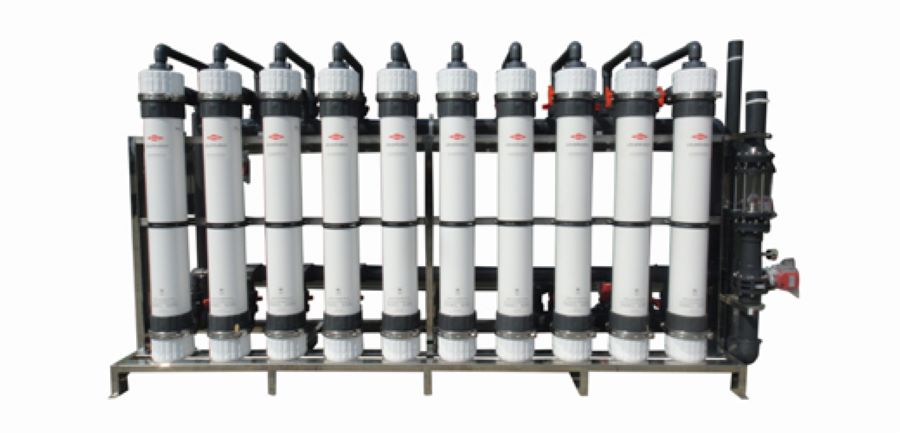
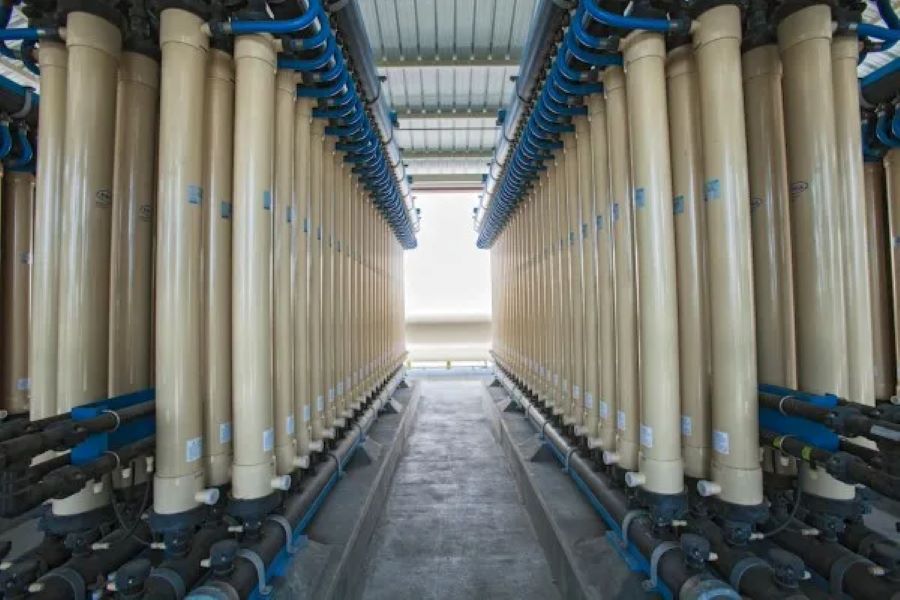
The water filtration column is a device that removes impurities remaining after preliminary and biological treatment processes
A water filtration column usually has a vertical cylindrical shape and is made of epoxy-coated steel, stainless steel, or high-pressure composite materials. Inside the column are multiple layers of filter media arranged from bottom to top, including supporting gravel, quartz sand, activated carbon, or specialized materials such as manganese media and ion exchange resins depending on the treatment purpose. In addition, the equipment includes inlet and outlet water distribution pipes, control valves, pressure gauges, and backwash outlets to ensure stable operation.
The multi-layer media design helps optimize the retention of impurities and improve treatment efficiency. Each layer of material performs a specific function, from mechanical filtration and adsorption of organic substances to the removal of color, odor, or heavy metals in wastewater.
A water filtration column operates based on the principle of pressure filtration or gravity filtration. When water is pumped into the column, the water flows through the layers of filter media from top to bottom (or vice versa depending on the design). During this process, suspended solids, dirt, and impurities are retained through screening, adsorption, and ion exchange mechanisms.
After a period of operation, the filter media will accumulate impurities and reduce efficiency, so a backwashing process must be carried out. This process removes accumulated dirt from the filter media, restores filtration capacity, and extends the equipment’s lifespan. Thanks to its simple but effective operating mechanism, the water filtration column contributes to improving the quality of treated water in wastewater treatment systems.
This device provides many benefits in improving water quality. However, it also has some limitations that need to be considered during use.
Summary of the advantages and disadvantages of water filtration column equipment
Advantages
Disadvantages
Water filtration columns require periodic backwashing to prevent clogging and filtration efficiency reduction. If maintenance is not carried out on schedule, the filter media will accumulate large amounts of impurities, reducing flow rate and effluent quality. In addition, the treatment efficiency of the equipment largely depends on the quality and type of filter media used. Selecting materials that are not suitable for the characteristics of the water source may lead to unsatisfactory treatment performance.
In addition, water filtration columns cannot completely treat dissolved pollutants unless combined with other technologies such as physico-chemical treatment or advanced membrane filtration. For large-capacity systems, the equipment may occupy a relatively large installation area, affecting site layout. At the same time, filter media must be replaced after a certain period of use, generating additional operating and periodic maintenance costs.
Water filtration columns are widely used in many wastewater treatment fields thanks to their ability to remove suspended solids and improve effluent quality. In domestic wastewater treatment systems, the equipment is often installed in the tertiary treatment stage to ensure the water meets standards before discharge.
For industrial wastewater, water filtration columns are used in industries such as food processing, textile dyeing, electronic component manufacturing, or centralized industrial parks to remove remaining color, odor, and heavy metals. In addition, the equipment is also integrated into water reuse systems to improve treatment efficiency and save water resources.
In general, water filtration columns are important equipment that helps complete the wastewater treatment process, improving effluent quality before discharge or reuse. With a simple structure, stable performance, and flexible customization according to different water sources, this equipment is widely used in many industrial and civil sectors. Although there are certain limitations, when properly designed, operated, and maintained, water filtration columns remain an economical and sustainable solution in modern wastewater treatment systems.
To ensure the system operates efficiently, durably, and in accordance with technical standards, choosing a reputable consulting and construction unit is extremely important. With a team of experienced engineers and an optimized design process tailored to each water source characteristic, Dai Nam is committed to providing suitable wastewater treatment solutions, ensuring effluent quality meets current standards. Contact 0909 378 796 for site survey, consultation, and proper system implementation from the beginning, helping businesses save costs and maintain stable long-term operation.