Amid the rapidly accelerating pace of urbanization, the demand for modern and environmentally friendly residential areas is increasingly emphasized. The Thuan Phat Land Residential Area Project was developed to provide a convenient, green, and clean living environment for the community. Alongside that, environmental protection—especially domestic wastewater treatment, the primary source of wastewater in residential areas—is always a top priority for the investor.
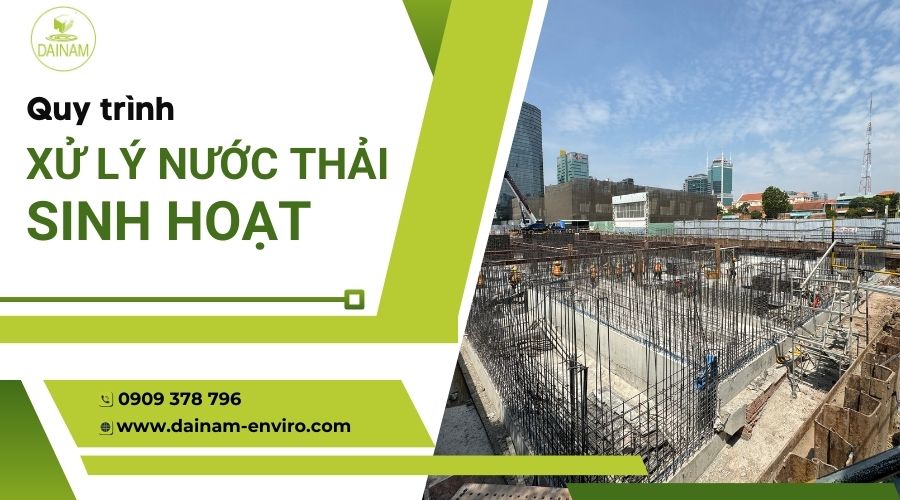
Recognizing this importance, Công ty TNHH Giải pháp Môi trường Đại Nam was entrusted as the consulting, design, and construction contractor for the centralized wastewater treatment system of the project. The system is designed with a capacity of 330 m³/day, fully meeting the wastewater treatment demand of the residential area and ensuring the treated effluent meets QCVN 14:2008/BTNMT – Column A before being discharged into the receiving environment.
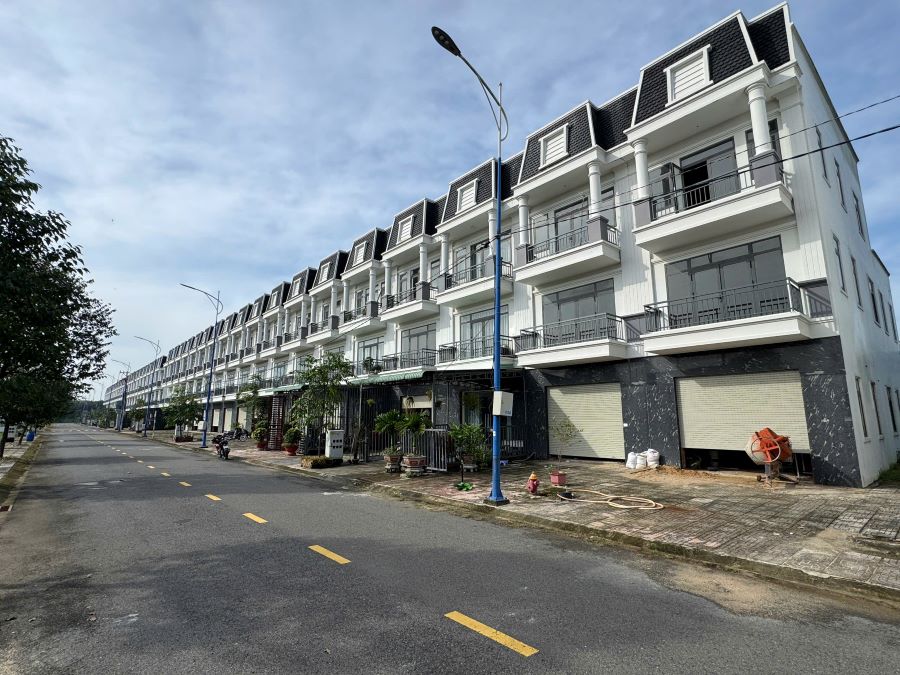
The housing complex aims to create a modern, comfortable, and environmentally friendly residential area.
The Thuan Phat Land Residential Area is planned and constructed with the goal of forming a modern, convenient, and environmentally friendly community. The project features synchronized technical infrastructure and landscaping, providing a high-quality living environment for residents. With a growing population, water consumption and domestic wastewater generation are inevitable. Therefore, investing in a standard centralized wastewater treatment system is an essential requirement to ensure a clean living environment and contribute to sustainable urban development.
To meet this demand, Dai Nam Environmental Solutions was selected as the contractor to design and construct the centralized wastewater treatment system with a capacity of 330 m³/day. The system is designed in accordance with current technical standards, applying advanced biological treatment technology combined with effective sedimentation, filtration, and disinfection processes. All domestic wastewater generated within the residential area is collected and thoroughly treated to meet QCVN 14:2008/BTNMT – Column A before discharge. This solution not only helps the investor comply with environmental regulations but also demonstrates a strong commitment to sustainable development and a green–clean–safe living environment for the Thuan Phat Land community.
In addition to synchronized infrastructure investment, the Thuan Phat Land project places special emphasis on environmental protection by constructing a modern centralized wastewater treatment system. The system plays a crucial role in maintaining a green, clean, and safe environment for residents through the following standard treatment process:
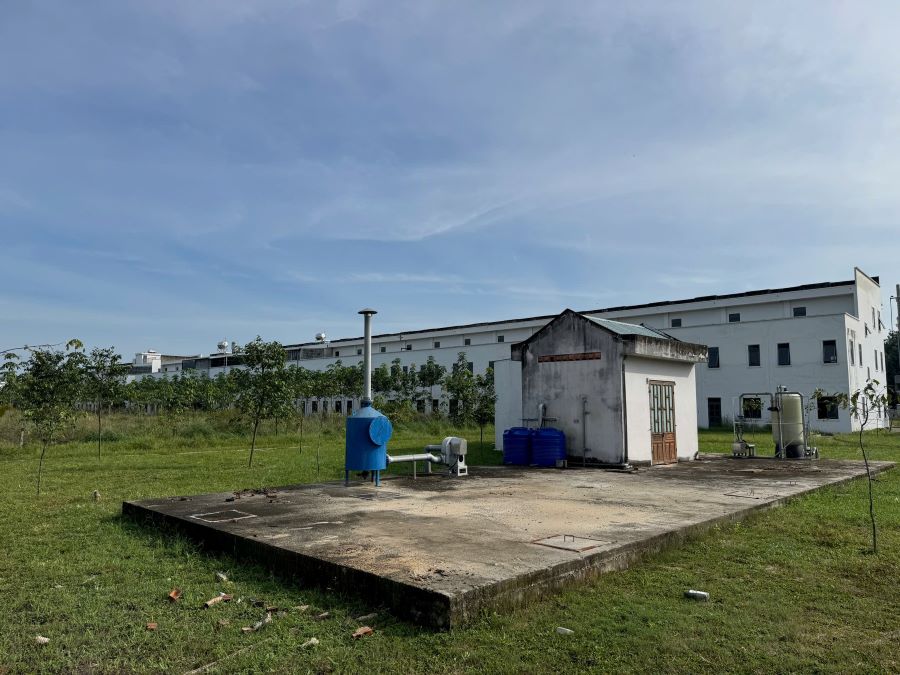
The wastewater treatment system for the Thuan Phat Land project has a capacity of 330 m3/day.
The collection pit receives all wastewater from the drainage system, including toilet wastewater (after septic tanks), bathing and laundry areas, floor drains, and kitchens. Bar screens are installed to retain coarse solids, preventing clogging and protecting downstream pumps and pipelines. After removal of large debris, wastewater is pumped to the grease trap combined with grit settling.
This unit removes oils, grease, and heavy particles such as sand and gravel. Due to density differences, grease floats to the surface while sand and solids settle at the bottom. Grease and grit are periodically removed, while clarified water flows by gravity to the equalization tank.
The equalization tank balances flow rate and stabilizes influent quality, ensuring stable biological treatment and preventing shock loading to microorganisms. Air diffusers at the bottom mix the wastewater and prevent sedimentation. Two submersible pumps operate alternately to ensure continuous operation before transferring wastewater to the Anoxic tank.
The Anoxic tank treats nitrogen and phosphorus compounds under oxygen-deficient conditions. Heterotrophic bacteria perform denitrification and phosphorus removal while degrading organic matter. Honeycomb bio-media increase surface area for microbial attachment. Recirculation from the aerobic tank and sludge return help maintain mixing. The ideal nutrient ratio is BOD:N:P = 100:5:1. If nutrients are insufficient, external carbon sources such as molasses, methanol, or ethanol are dosed.
The MBBR unit is an aerobic biological process using floating plastic carriers for microbial growth. It combines the advantages of activated sludge and biofilm systems, improving organic removal efficiency. Air supplied by blowers ensures oxygen and keeps carriers in motion. Aerobic microorganisms degrade organic matter into CO₂, water, and simple minerals.
After MBBR–Aerotank, wastewater containing biomass enters the clarifier for sludge separation. Sludge settles by gravity and is partially returned to the Anoxic tank; excess sludge is sent to the sludge tank. Clarified water overflows to the disinfection tank.
This unit eliminates pathogenic microorganisms using sodium hypochlorite (NaOCl). As a strong oxidant, it destroys cell membranes and enzymes, ensuring hygienic safety. Treated water is pumped to the pressure filter.
This final filtration stage removes remaining suspended solids using quartz sand and gravel media. Backwashing is conducted when needed. Filtered water achieves high clarity and meets discharge standards.
The tank collects treated water that meets QCVN 14:2008/BTNMT – Column A standards before discharge into the receiving source through the project’s drainage network, eventually flowing into Bau Long Stream (also known as Tham Rot Stream).
This tank stores excess sludge from biological treatment. When stable, 90–95% of sludge is recirculated; 5–10% is discharged to the sludge tank for proper treatment and disposal by licensed units.
A centrifugal fan draws odorous air into an odor treatment tower containing activated carbon media, which adsorbs volatile odor-causing compounds, ensuring discharged air meets environmental standards.
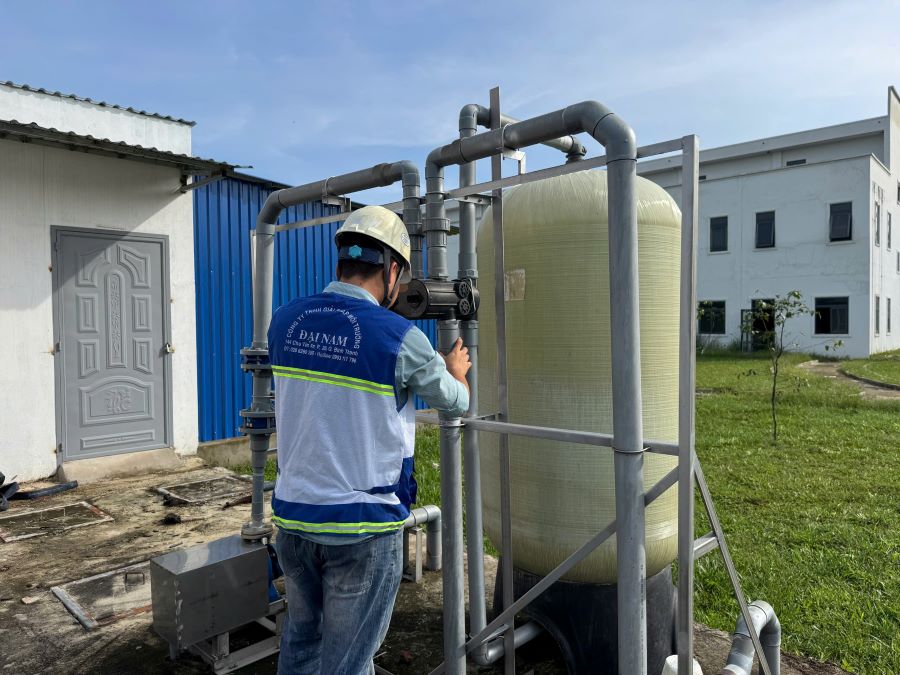
The process ensures that treated wastewater meets QCVN 14:2025/BTNMT standards according to column A.
The Thuan Phat Land wastewater treatment system is designed to ensure all domestic wastewater is thoroughly treated before discharge. By applying advanced biological technology combined with mechanical and physicochemical processes, the system effectively removes pollutants, grease, suspended solids, and harmful microorganisms. Treated effluent meets QCVN 14:2008/BTNMT – Column A, the highest standard for domestic wastewater.
Investing in a modern wastewater treatment system not only ensures legal compliance but also demonstrates the investor’s commitment to sustainable development and social responsibility. The project, constructed and delivered by Công ty TNHH Giải pháp Môi trường Đại Nam, affirms system quality, operational stability, and long-term environmental protection.